Blog

  • Hy-SPIRE at EFCF!

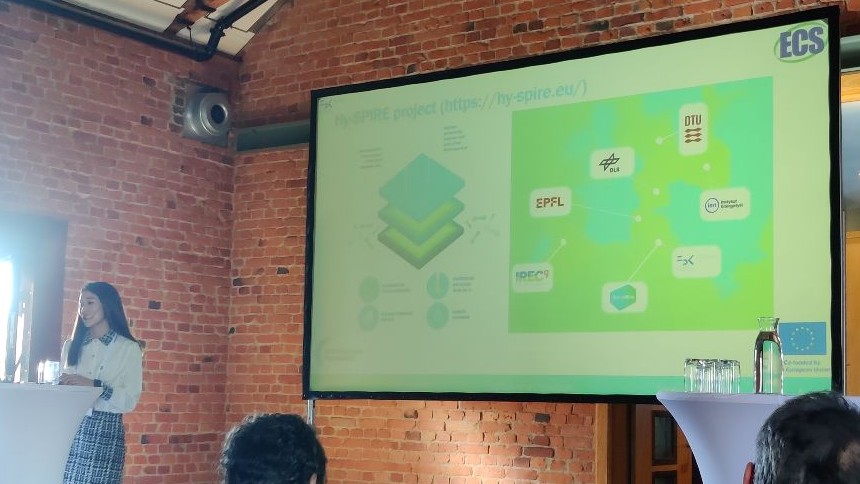
    From June 30 to July 3, Lucerne hosted the EFCF – European Electrolyser and Fuel Cell Forum, a high-level international fuel cell & electrolyser event offering a presentation of the state-of-the-art technology

    And our Hy-SPIRE Project partners were there!

    • SolydEra participated with a booth presenting their technology and the projects they participate in
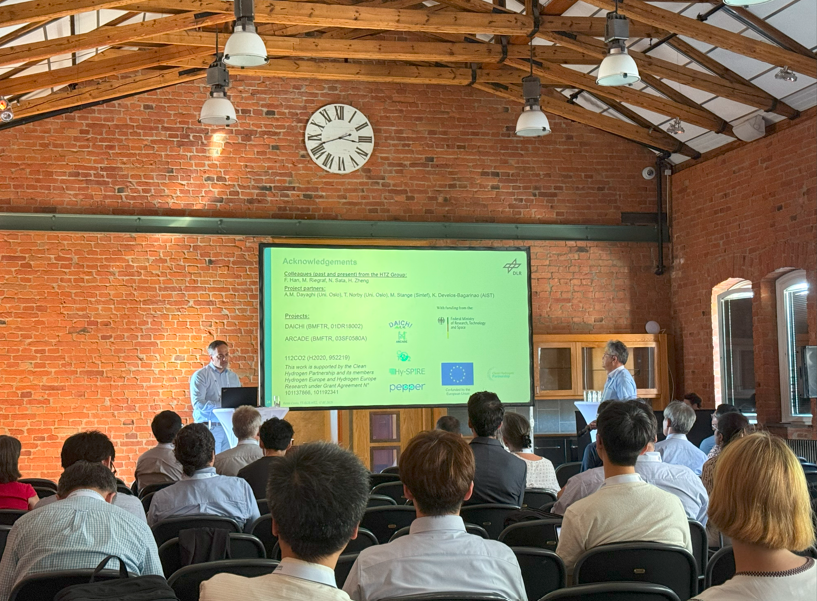
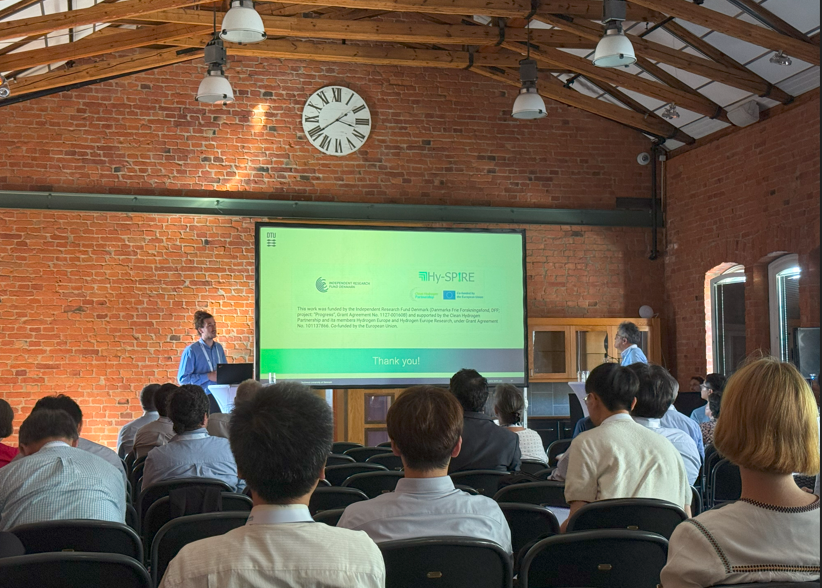
    • Rémi Costa (DLR Institute of Engineering Thermodynamics) chaired the session “Interconnects”
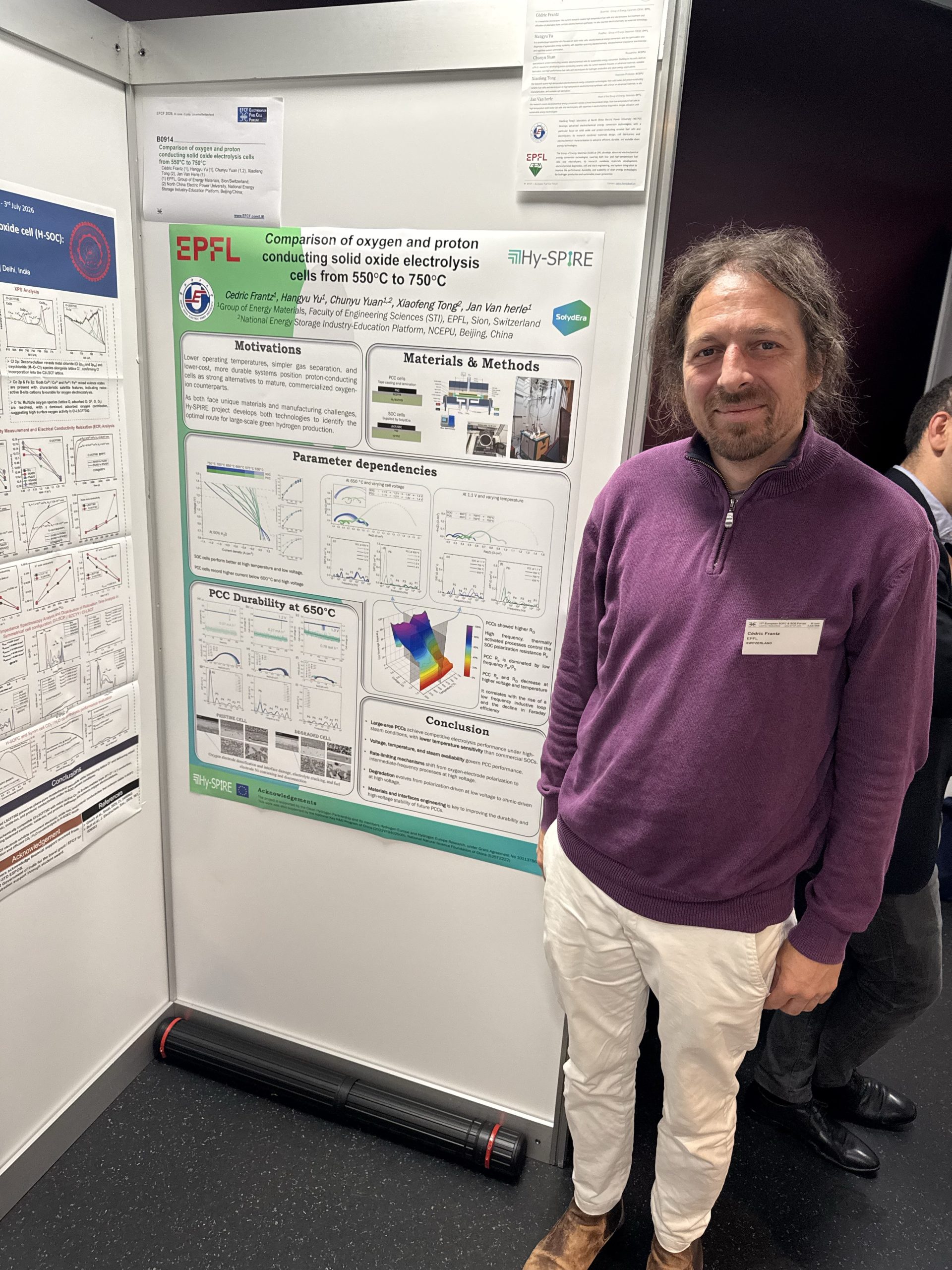
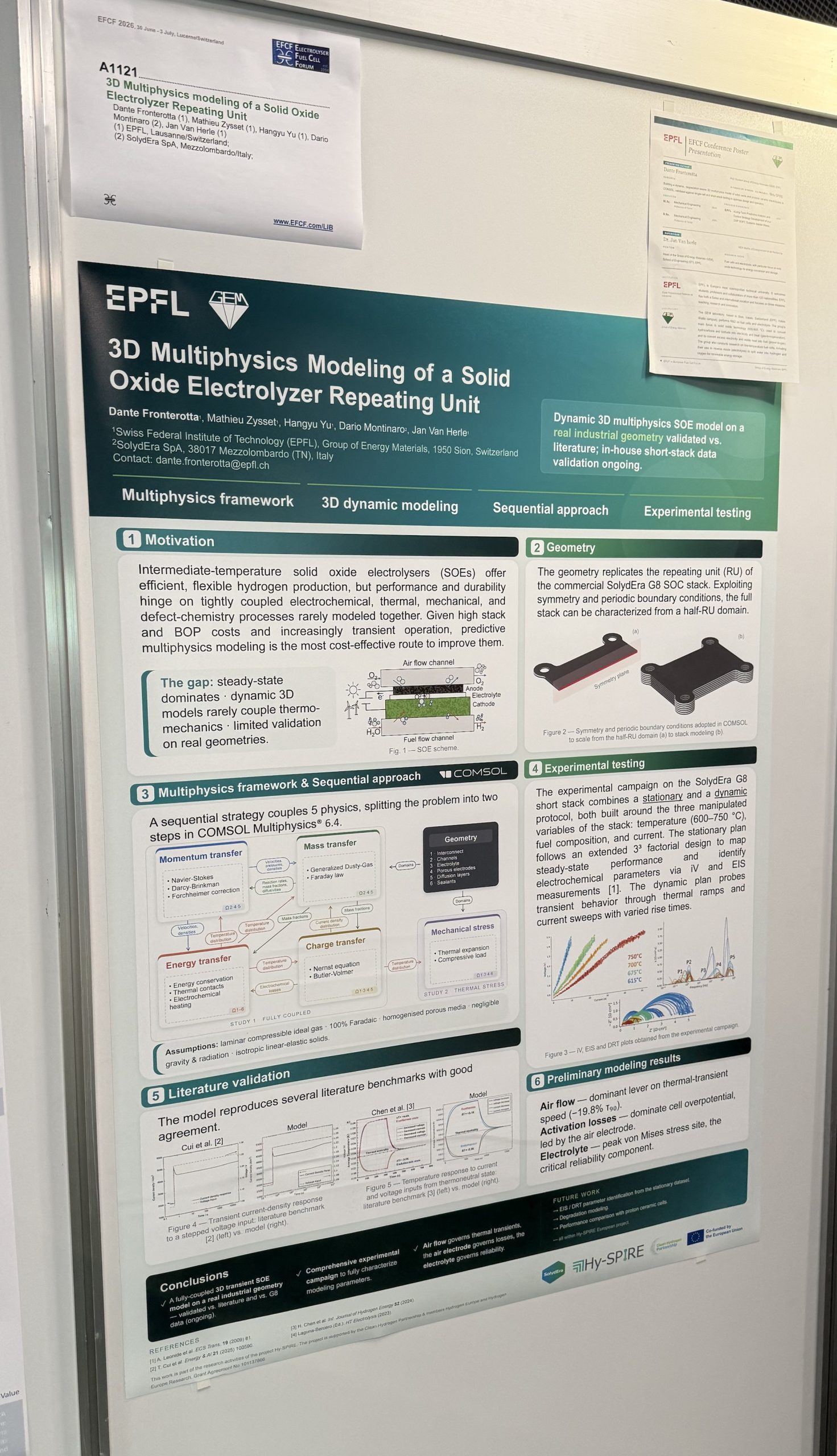
    • Dante Fronterotta and Cédric Frantz (EPFL) participated respectively with the posters “3D Multiphysics modeling of a Solid Oxide Electrolyzer Repeating Unit” and “Comparison of oxygen and proton conducting solid oxide electrolysis cells from 550°C to 750°C”
    • Kosova Kreka (IREC – Institut de Recerca en Energia de Catalunya) with the work “Low-Critical Raw Materials Solutions for Solid Oxide Oxygen Electrodes”
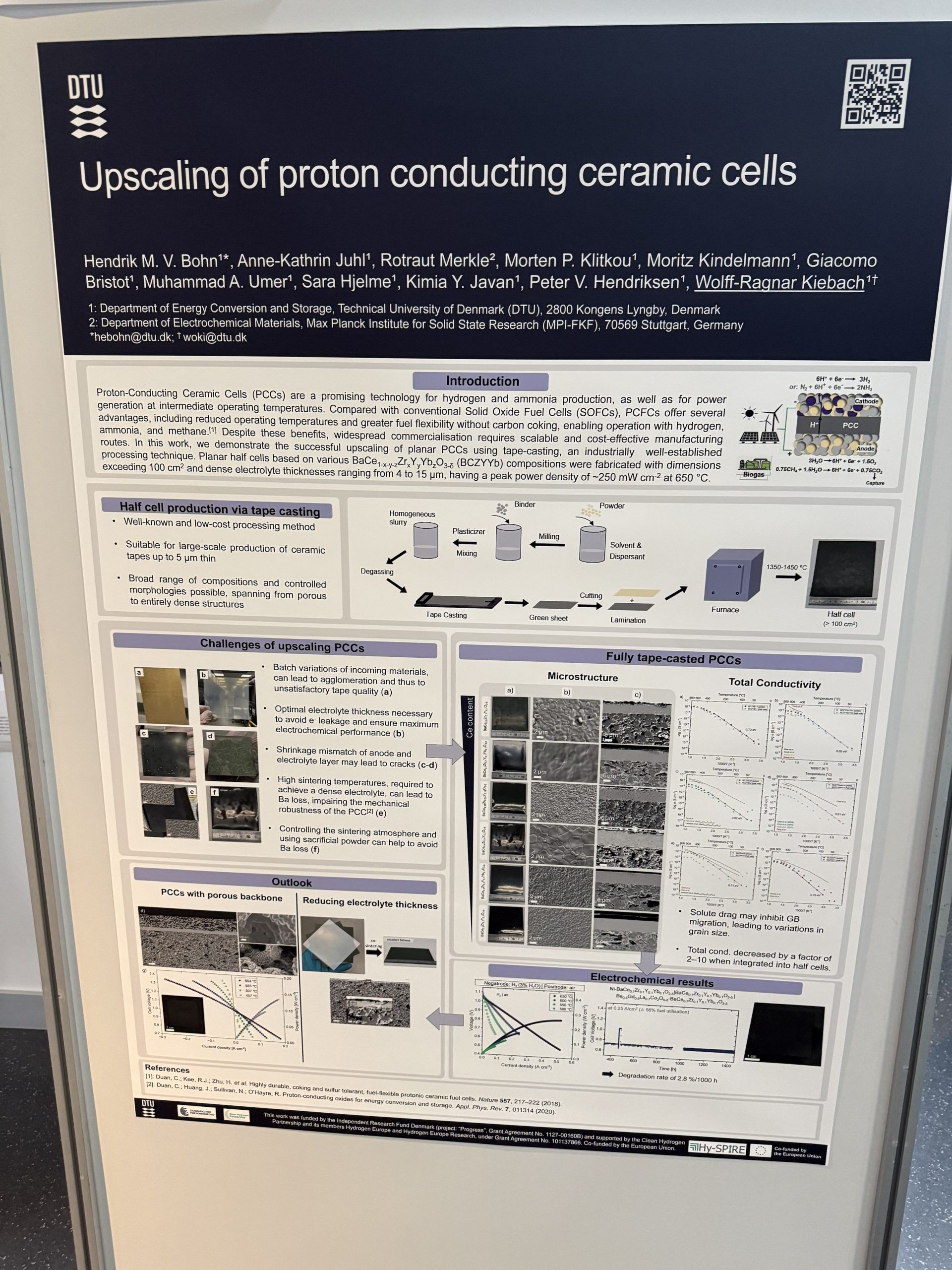
    • Ragnar Kiebach (DTU – Technical University of Denmark DTU Energy) co-chaired the session Cell & Stack Manufacturing and presented the poster “Upscaling of proton conducting ceramic cells”
  • PhD thesis defended on PCCs!

    Congratulations Hendrik Bohn!

    Hendrik has recently defended his PhD thesis titled “Upscaling Planar Proton-Conducting Ceramic Cells for Energy Conversion” at the Technical University of Denmark

    In his work, Hendrik Bohn developed an industrially relevant tape-casting route to fabricate planar PCCs up to 12 cm x 12 cm using commercially sourced precursors.

    Science Summary:

    Proton-Conducting Ceramic Cells (PCCs) offer a promising route to produce strategically important, low-carbon energy vectors, such as green hydrogen and ammonia, while reducing reliance on precious metals and lowering system costs. To date, commercialisation has been limited by the lack of robust processing routes for fabricating upscaled planar PCCs. In addition, the refractory nature of barium zirconate-/cerate-based proton-conducting oxides makes it challenging to densify thin electrolyte layers while minimising the loss of volatile and essential elements, often resulting in mechanically fragile large-area cells.

    In this dissertation, an industrially relevant tape casting route was developed to fabricate large-area, planar PCCs with dimensions up to 12 cm x 12 cm using exclusively commercially sourced precursors, demonstrating the scalability of the approach. Key processing challenges were identified and addressed.

    First, supplier-to-supplier variations in organic additives, particularly the dispersant, were found to strongly affect slurry behaviour and downstream processing outcomes.
    Second, shrinkage management during debinding and co-sintering was shown to be critical for producing crack-free cells. Notably, deliberately introducing a controlled shrinkage mismatch between the electrolyte and the Ni-based negatrode resulted in successful co-sintering.
    Third, systematic optimisation through sintering aid addition and co-sintering temperature variation, combined with strategies to suppress Ba volatilisation without relying on large quantities of sacrificial powder, were further explored. These efforts led to reproducible fabrication of large-area PCCs based on six different BaCe x Zr 1-x-y-z Y y Yb z O 3-δ compositions.

    A deeper investigation of the commercial ceramic powders revealed deviations from the nominal effective acceptor dopant concentration. The intrinsic hydration behaviour and conductivity contributions of the powders were analysed using pellets, indicating improved protonic conductivity with increasing Ce content and acceptor dopant concentration. However, upon integration into application-relevant half cell architectures, total conductivity decreased relative to the intrinsic pellet behaviour, with losses becoming more pronounced for Zr-rich compositions. This observation is likely attributed to interaction with the Ni-based negatrode and grain boundary-related processing challenges.

    Electrochemical characterisation of a PCC with an active area of 16 cm 2 delivered a peak power density of ~0.26 W cm -2 at 650 °C in FC mode, reached ~0.27 A cm -2 at 1.3 V in EC mode, and showed a degradation rate of ~2.8 % over 1000 h. These results provide a benchmark for future optimisation efforts, which will focus on optimising cell microstructure and architecture.

    The thesis will soon be available in Open Access on http://orbit.dtu.dk/

  • Hy-SPIRE at H2Poland

    Hy-SPIRE at H2Poland

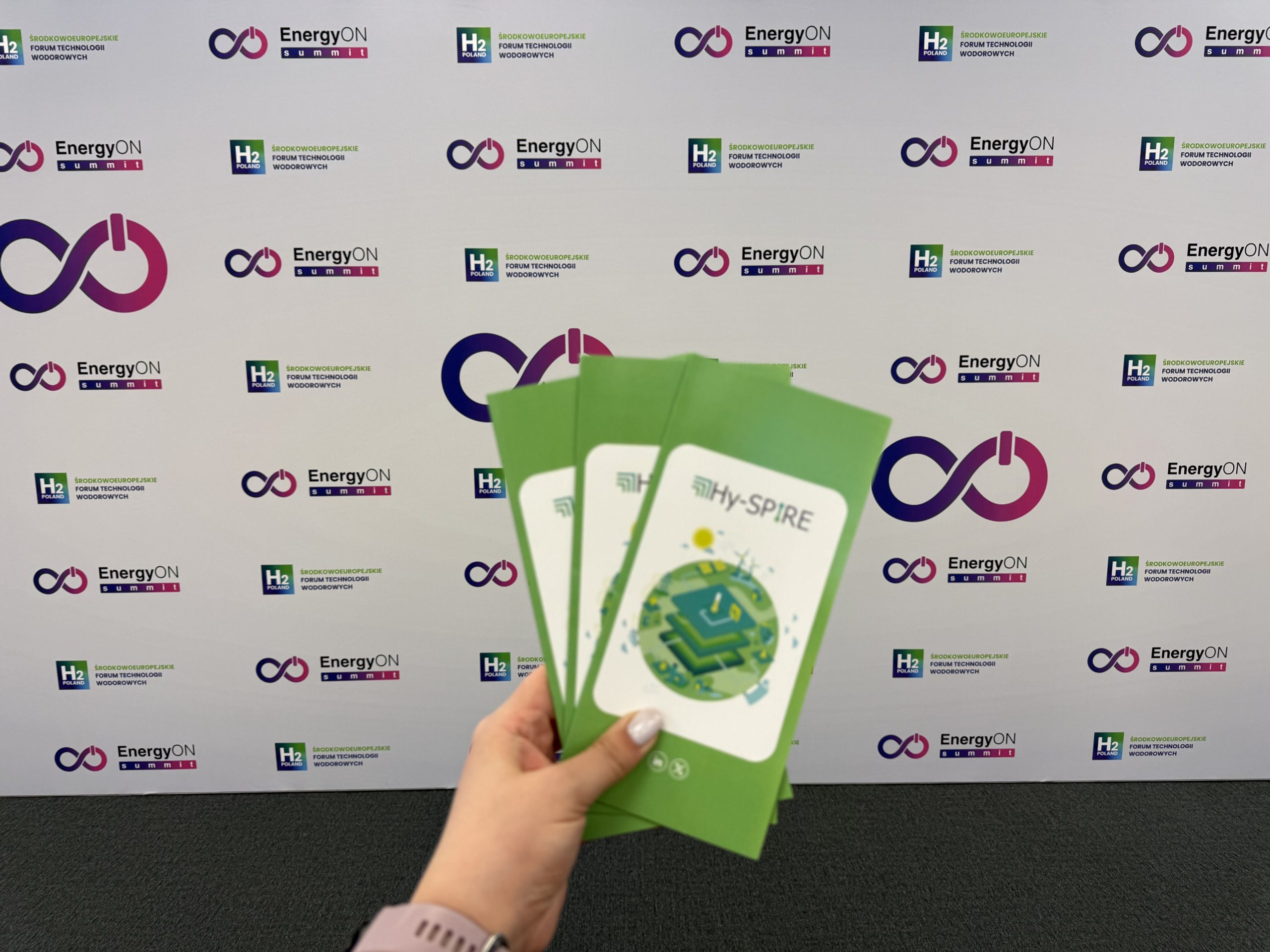
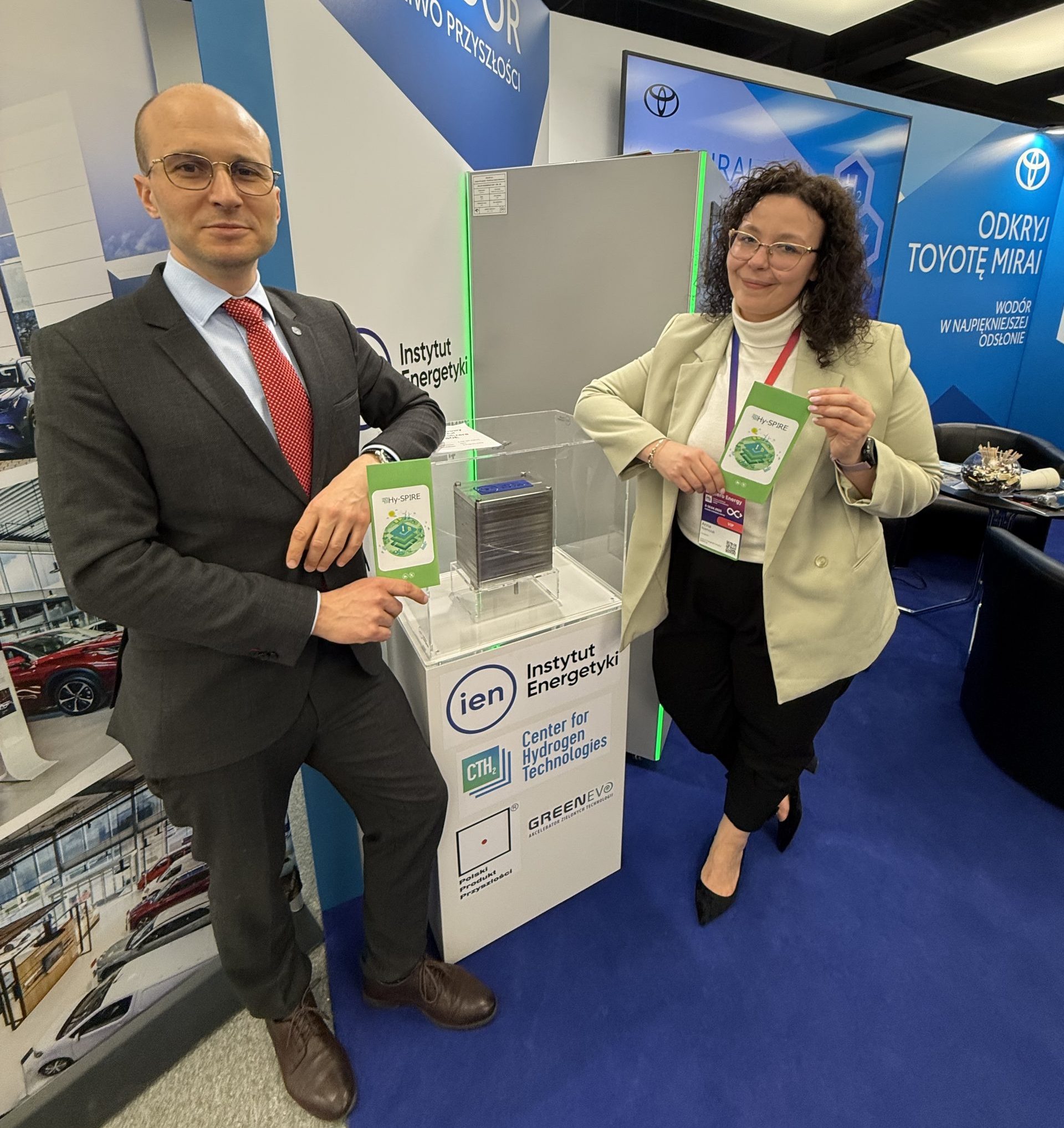
    Last week, on 24-25 March 2026, Hy-SPIRE Project was promoted at H2POLAND.

    The event is the first trade fair in Poland and Central and Eastern Europe devoted entirely to hydrogen technologies, an opportunity to discuss about the future of decarbonization and the European economy play a key role.

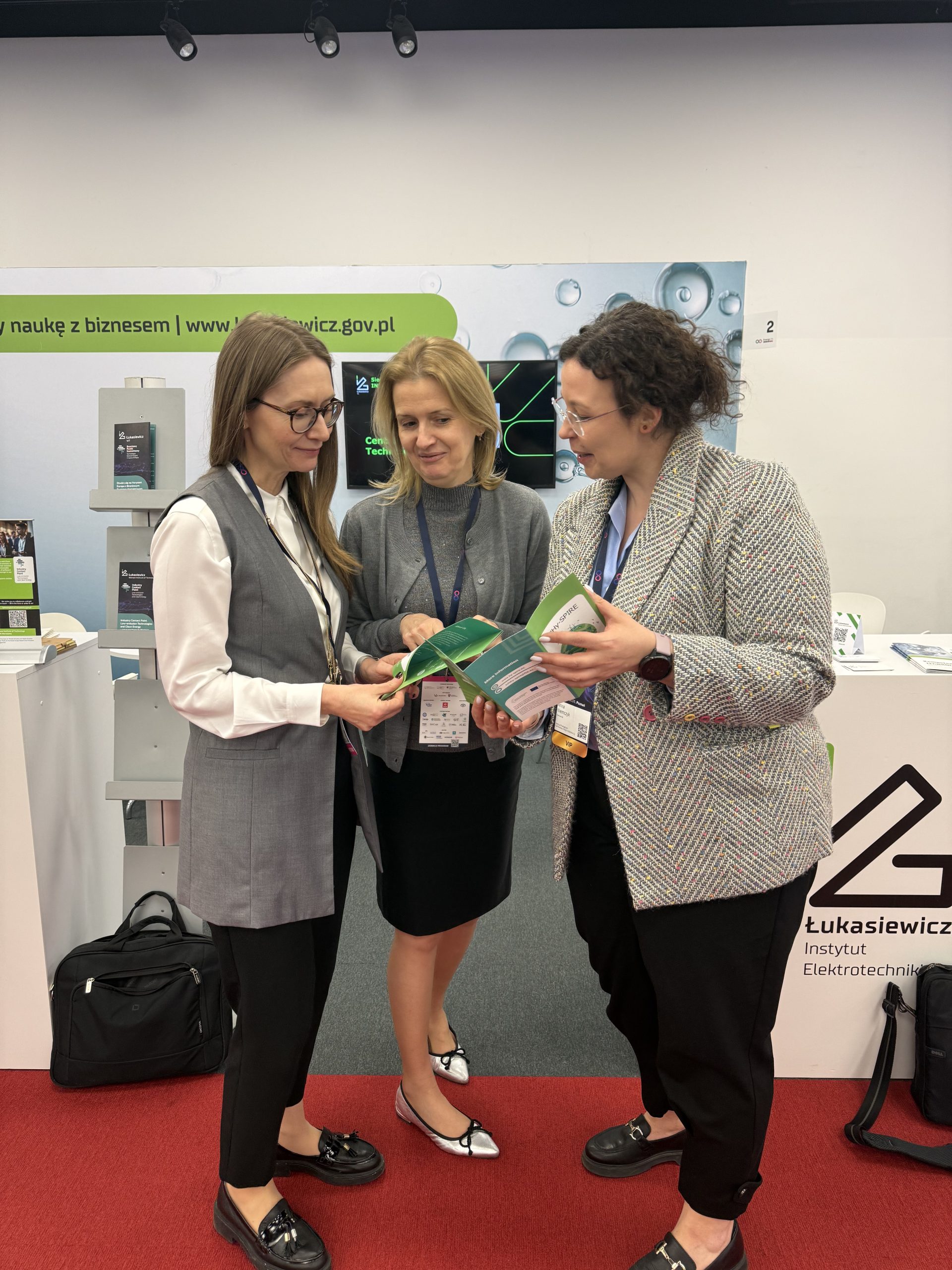
    During the event, visitors had the opportunity to learn more about the project at the booth of the project Coordinator, the Center for Hydrogen Technologies (CTH2), Institute of Power Engineering – National Research Institute.

    During the last year edition, over 4,500 participants, 150 exhibitors from 11 countries, 150 speakers and over 80 debates participated in the event and the exhibition was rich in the latest solutions in the field of renewable energy sources, energy storage and low-emission technologies, including, of course, hydrogen, was highly appreciated by visitors.

    In 2026, H2Poland was heldu with the EnergyON Summit, a conference and exhibition event dedicated to key directions in energy transition and industrial decarbonization. EnergyON Summit is also a meeting place for industry leaders, decision-makers, experts, and suppliers of innovative solutions for the energy sector of the future.

    H2Poland: https://energyonsummit.pl/en/about-event/about-h2poland/

    EnergyON Summit: https://energyonsummit.pl/en/about-event/about-energyon-summit/

  • New scientific article for Hy-SPIRE!

    New scientific article for Hy-SPIRE!

    Well done to the researchers of our project partner École Polytechnique Fédérale de Lausanne recently published a paper acknowledging Hy-SPIRE Project!

    The paper is entitled Inkjet Printing Towards Dense Spinel Protective Coatings for Solid Oxide Cell (SOC) Applications and has been published in Open Access on the Journal of the American Ceramic Society!

    Abstract

    This study aimed to develop a dense protective coating of Mn1.7Cu1.3O4 spinel on SOC interconnects using inkjet printing. The work focused on formulating a well-dispersed, stable, and agglomerate-free ink to obtain a dense, uniform, and full surface coating layer. Achieving a dense layer, requires an ink with high powder content. However, highly loaded inks increase the risk of agglomeration and nozzle blocking. This makes the colloidal stability and dispersion properties critical.
    Mn1.7Cu1.3O4 colloids were formulated in water using polyacrylic acid (PAA) as the dispersant. The PAA concentration was optimized through sedimentation tests and rheological analyses, both directly linked to colloidal stability. Isopropanol and propylene glycol were added to adjust ink properties for jettability. Interparticle interactions were modeled to understand the stability mechanism, focusing on the effects of particle size and pH for the aqueous PAA-spinel system. The optimal PAA concentration for a specific solvent mixture was found as 0.4–0.6 vol% with the particle loading up to 20 vol%.
    Dense protective coatings were successfully obtained after sintering at using the optimized mixture. Corrosion ageing tests by monitoring the area specific resistance (ASR), with post-test SEM/EDX analysis confirmed that the more optimized ink resulted in better corrosion protectiveness.sealing geometry that prevents a potential gas crossover in the symmetrical proton-conducting ceramic cell.

    Cite this article

    S.Daviran, J.Van herle, and P.Bowen, “Inkjet Printing Towards Dense Spinel Protective Coatings for Solid Oxide Cell (SOC) Applications.” Journal of the American Ceramic Society109, no. 3 (2026): e70654. https://doi.org/10.1111/jace.70654

    Read the article in Open Access at this link or find it on our “Results” web page: https://hy-spire.eu/results/

  • Hy-SPIRE at EHEC2026

    Hy-SPIRE at EHEC2026

    EHEC 2026 – the EUROPEAN HYDROGEN ENERGY CONFERENCE took place in Seville on 11-13 March 2026. EHEC aims to facilitate sharing technical knowledge, building connections, and fostering business opportunities within the hydrogen sector.

    Emanuele de Bona from the Center for Sustainable Energy of Fondazione Bruno Kessler presented the latest results on high temperature solid oxide cell activities within the Center for Sustainable Energy, including the installation and validation of our new test bench for reversible single cell testing. The oral presentation “Proton-Conductor Solid Oxide Electrolysis Cells prepared by Physical Vapor Deposition: Physico-Chemical Characterization and Preliminary Electrochemical Performance” was well received, and served as a starting point for fruitful discussion with both academic and industrial attendees. This work was developed within Hy-SPIRE Project, H2TN project and the IPCEI ORION.

    https://ehec.info/

  • Hy-SPIRE at ModVal Conference 2026

    Hy-SPIRE at ModVal Conference 2026

    On March 10-11, 2026, the 22nd Symposium on Modeling and Validation of Electrochemical Energy Technologies (ModVal 2026) took place in Lausanne, Switzerland. 

    The event was hosted by the Group of Energy Materials of EPFL together with the group of Prof. Haussener.

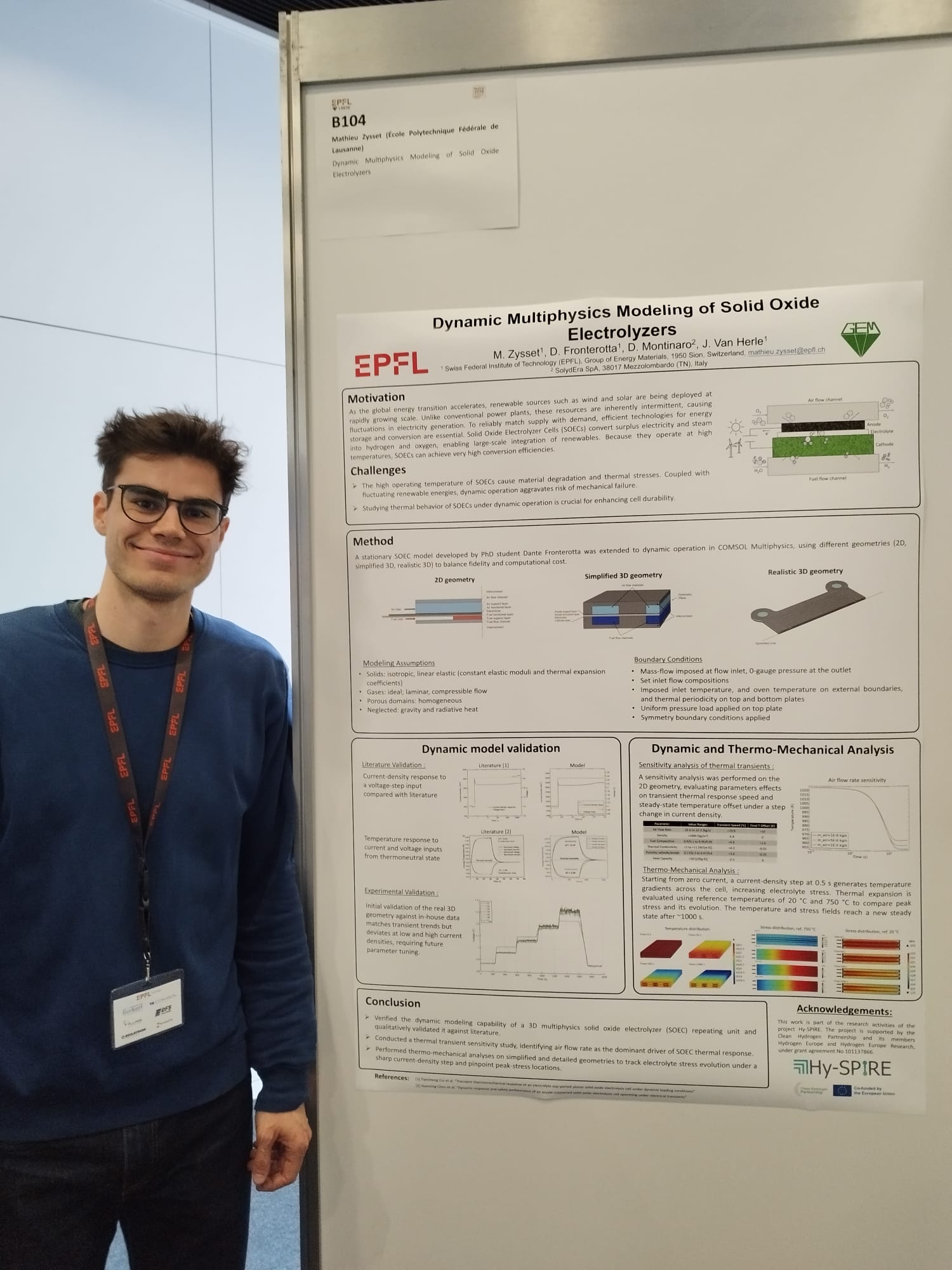
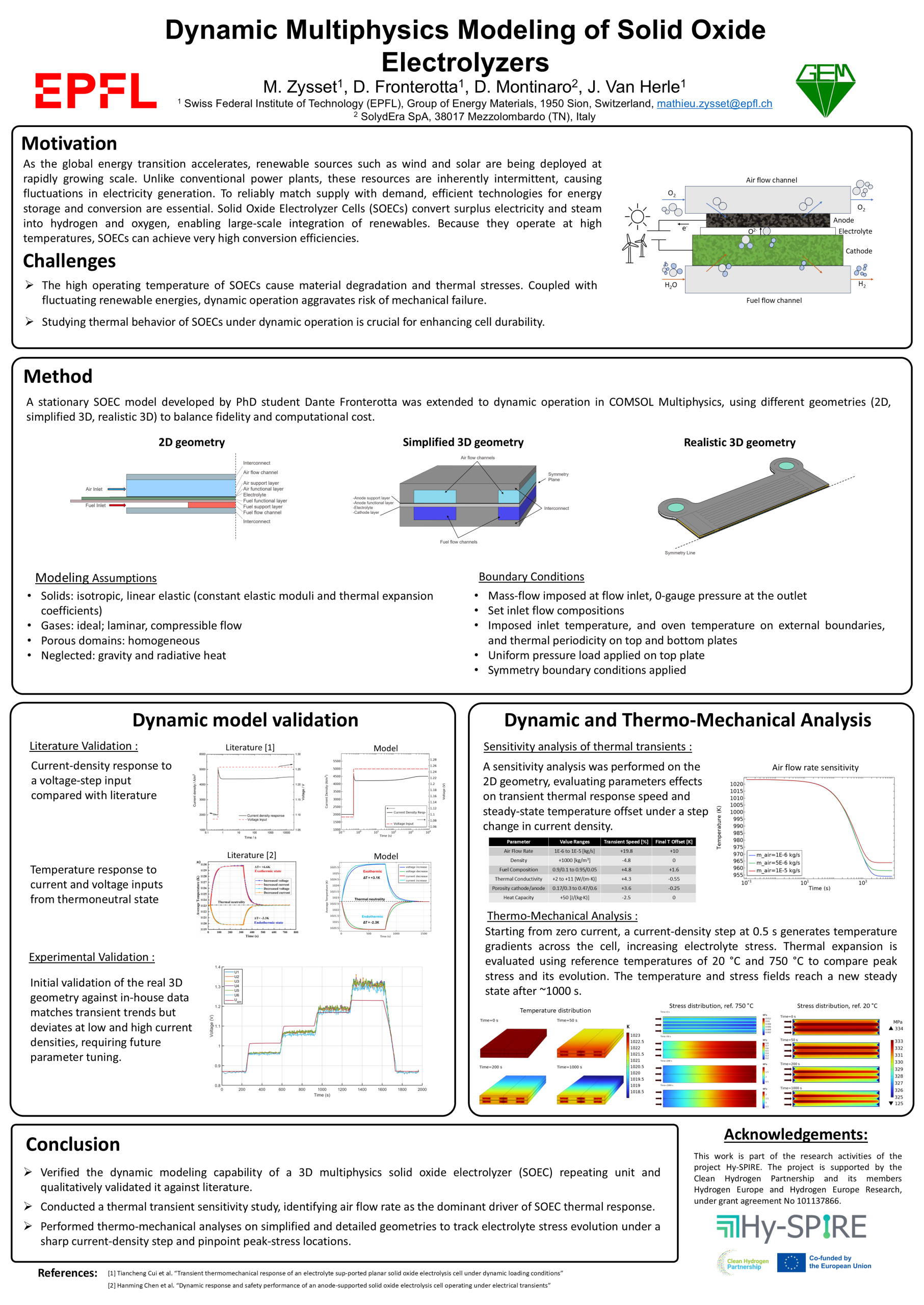
    During the event, the master’s student Mathieu Zysset presented his master’s thesis work related to HySPIRE on SOEC dynamic modeling, carried out under the supervision of Prof. Van Herle and Dante Fronterotta.

    The poster title is “Dynamic Multiphysics Modeling of Solid Oxide Electrolyzers” and the main conclusions reported are the following:

    • Verified the dynamic modeling capability of a 3D multiphysics solid oxide electrolyzer (SOEC) repeating unit and
      qualitatively validated it against literature.
    • Conducted a thermal transient sensitivity study, identifying air flow rate as the dominant driver of SOEC thermal response.
    • Performed thermo-mechanical analyses on simplified and detailed geometries to track electrolyte stress evolution under a sharp current-density step and pinpoint peak-stress locations.
  • Innovation and SOC: a great discussion during the webinar organised by the PROMETEO, Hy-SPIRE, 24/7 Zen and HyP3D projects

    Innovation and SOC: a great discussion during the webinar organised by the PROMETEO, Hy-SPIRE, 24/7 Zen and HyP3D projects

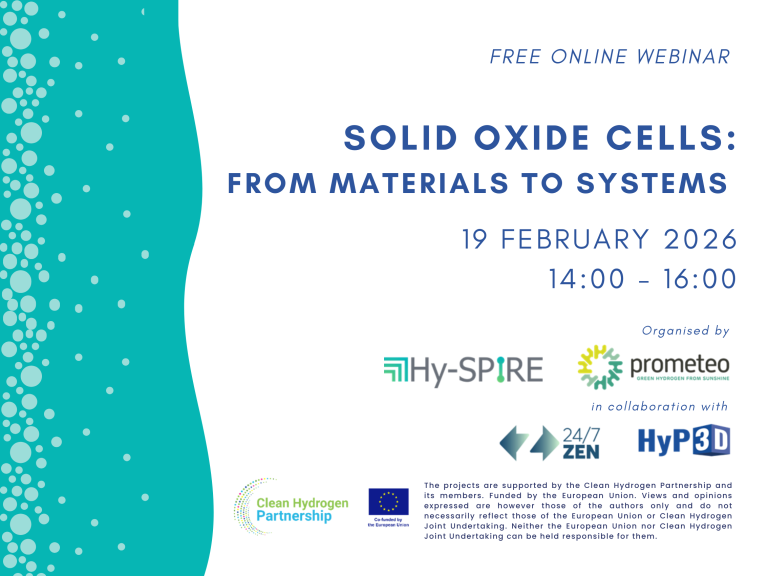
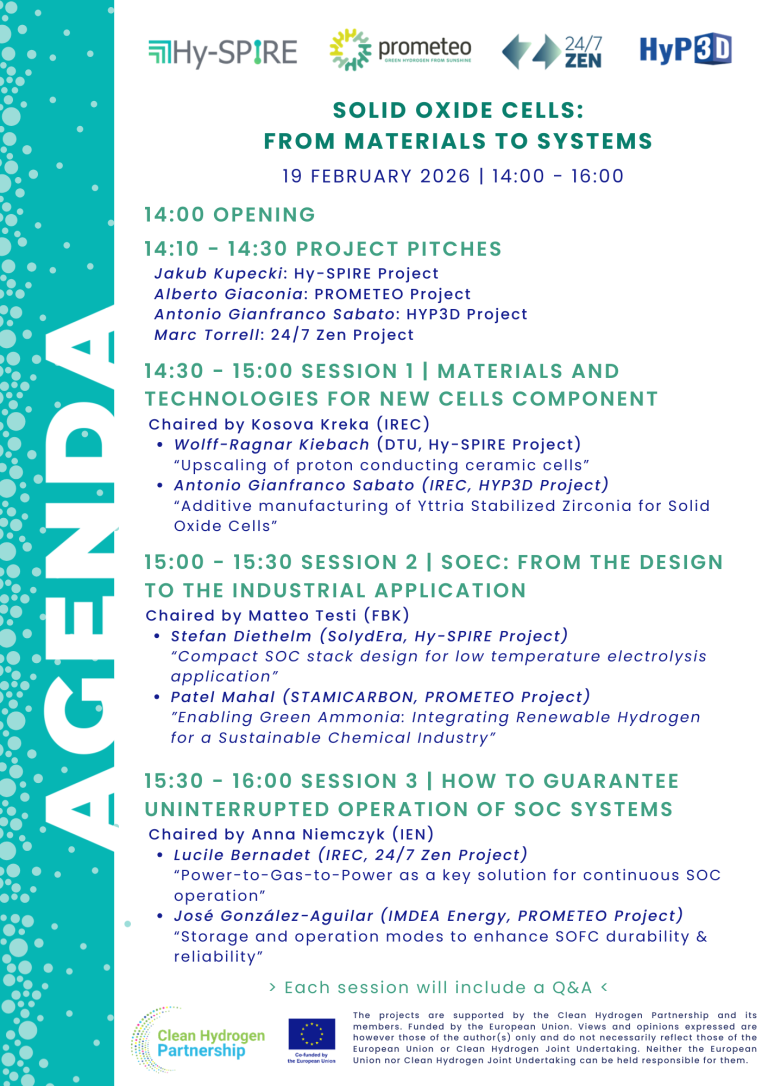
    The Hy-SPIRE and PROMETEO Consortia organised a joint webinar on “Solid Oxide Cells: From Materials to Systems” on February 19, 2026, in strong collaboration with 24/7 Zen and HyP3D projects. 

    The webinar had a dual purpose: on one side, it aimed at presenting the results achieved so far by the projects, exchanging best practices and lessons learnt. On the other side, the projects wished to foster the discussion on the potential of SOCs, which have emerged as a cornerstone technology for high-efficiency energy conversion with great versatility. This is the reason why the event was structured to touch different aspects from materials innovation to the design of systems and industrial applications.

    The webinar was successful and raised the interest of a high number of people. This is witnessed by the numbers: 260 people enrolled via Eventbrite in the webinar and almost 140 participated in the webinar.

    Highlight:

    • PROMETEO prototype is under construction and will soon be installed at ENEA Premises where it will be connected to a hydrogen valley
    • Hy-SPIRE developed ultra-thin electrolytes for O-SOE and P-SOE cells through the optimization of nano-suspension coating processes, and a thin, fully dense barrier layers by optimising barrier-layer compositions and implementing PLD technology.
    • 24/7 Zen achieved different goals and results from fundamentals to demo level and in particular the project developed new electrodes achieving 3A/cm2 at cell level and are proceeding with the installation of the final system in Greece
    • HyP3D successfully fabricated large-area cells incorporating features designed for high-pressure operation, validated cells in SRU and 20-cells stacks at atmospheric pressure and the first SRU was successfully tested up to 2 bar
    • DTU further improved by integration of an anode functional layer and successfully up-scaled cells which can be produced in batches of >20 cells.
    • Within HYP3D, IREC build their own stack starting from 3-cell short stack and a 18-cell stack which was a first proof of concept of stacking these cells and testing them at atmospheric pressure, which allowed HyP3D to approach some power densities close to the one of conventional SOC technology
    • EPFL developed a 3D model pf a Stack Repeating Unit with dynamic capabilities and run a wide test campaign
    • Within 24/7 Zen, IREC underlined the importance of continuous operation as it is a durability and economic necessity for SOC systems, demonstrated that thermal cycling, standby losses, and repeated start-up transients significantly impact efficiency and degradation.

    INFORMATION ON SPEAKERS

    • Prof. Jakub Kupecki at the Center for Hydrogen Technologies (CTH2) of IEN, took up the position of Director of the National Centre for Nuclear Research in September 2025. Member of the Executive Board of Hydrogen Europe Research, Coordinating Board in Polish Hydrogen Strategy and the Expert Group focused on Hydrogen in the Chamber of Natural Gas Industry, and Member of the Committee of Power Engineering of the Polish Academy of Sciences. Prof. Kupecki coordinates two Clean Hydrogen Partnership projects: HYSPARK and Hy-SPIRE Project.
    • Dr. Alberto Giaconia is a Researcher at ENEA where he currently covers the position of Head of Laboratory for Hydrogen and new Energy Vectors with about 50 scientists and technicians covering the whole value chain of hydrogen and renewable fuels. He coordinates PROMETEO Project.
    • Dr. Antonio Gianfranco Sabato is Research Scientist at IREC. His career is dedicated to advanced ceramics for solid-state energy conversion and storage. Over the past five years, his research has focused on advanced processing of Solid Oxide Cell materials, combining additive manufacturing of YSZ electrolyte-supported cells with advanced and ultrafast high-temperature sintering methods.
    • Dr. Marc Torrell Faro is a researcher in the Nanoionics and Fuel Cell Group at IREC, focusing on ceramic electrochemical devices for hydrogen production and use, including SOEC and SOFC technologies with advanced ceramic manufacturing. Dr. Torrell coordinates the 24_7 ZEN Project
    • Prof. Wolff-Ragnar Kiebach – Professor at the DTU and Head of the Section for Applied Ceramics and Processing. One of his research focuses is on PCCs, spanning material development, processing, and characterization for electrochemical energy devices. A central objective of his work is the accelerated implementation of materials into prototypes, including the upscaling of PCCs for practical applications.
    • Prof. Jan Van Herle – Since 2013, he has been the head of the Group of Energy Materials (GEM), a leading laboratory at EPFL for developing state-of-the-art fuel cells and electrolyzers.
    • Dr. Mahal Patel – Technology Engineer Ammonia at Stamicarbon. He brings extensive experience in syngas technologies including methanation, CO-shift, and autothermal reforming. With deep expertise in process design, he plays a pivotal role in the Ammonia/Nitrates department, driving innovative solutions for ammonia and related technologies
    • Dr. Lucile Bernadet is a research scientist at IREC, specialising in Solid Oxide Cells from materials to system-prototype scale. 20 peer-reviewed publications, 25 projects, +10 years of experience in the field give her a comprehensive understanding of the technology and its challenges.
    • Dr. José González-Aguilar – physicist and Head of the High Temperature Processes Unit at IMDEA Energy, leading research on high-temperature energy conversion and storage for renewable hydrogen and solar fuels. His work on solid oxide electrolysis focused on their thermodynamic and system-level integration with concentrated solar thermal, advanced thermal energy storage, and industrial heat sources. He combines fundamental physics, system modeling, and techno-economic analysis to advance electrolysis-based pathways from laboratory concepts to pilot-scale demonstration.
    • Dr. Kosova Kreka is a postdoc researcher at IREC.
    • Dr. Anna Niemczyk – Eng. Assistant Professor at the Department of High-Temperature Electrochemical Processes at IEN since October 2020, and Acting Head of the Department from September 2025. She has 10+ years of experience in research on new materials for SOEC, oxygen membranes, and oxygen storage materials, as well as in the preparation of solid oxide cells and the characterization of their electrochemical and microstructural properties. She has been a project manager and investigator in several funded and commercial projects.
    • Dr. Matteo Testi – Head of the Hydrogen Technologies and Resilient Energy System Unit at the Center for Sustainable Energy. He holds a PhD in Physics at the University of Trento on novel materials and methods for solid-state hydrogen storage technologies. He has expertise in numerical multiphysics and multiscale simulation tools, system control software, and chemical laboratory procedures, as well as developing control strategies for prototypes and physical systems. He is involved in different European projects.

    ATTACHMENTS

    Agenda: https://hy-spire.eu/wp-content/uploads/Webinar_program_final_2.pdf

    Presentazioni:


    RECORDING OF THE WEBINAR:

    If you wish to watch the recording of the webinar, please click on the video below!

    At the moment of the registration via Eventbrite, all participants declared to (i) have read and understood the policy about the processing of personal data, (ii) be aware that the public event may be recorded and that video/audio recordings and photographs may be disclosed on FBK and the projects’ institutional channels.

  • Launch of the joint webinar “Solid Oxide Cells: from Materials to Systems”

    Launch of the joint webinar “Solid Oxide Cells: from Materials to Systems”

    As the global energy transition accelerates, Solid Oxide Cells (SOCs) have emerged as a cornerstone technology for high-efficiency energy conversion with great versatility.

    The Hy-SPIRE and PROMETEO projects in collaboration with 24/7 ZEN and HyP3D projects organise the webinar “SOLID OXIDE CELLS: FROM MATERIALS TO SYSTEMS” on February 19 at 2PM.

    With three specialized sessions, the event covers a wide range of topics, moving from materials from material innovation to the design of systems and industrial applications.

    Session 1: Materials and technologies for new cells component. We will explore the potential of proton conducting ceramic cells and dive into innovative manufacturing techniques to create the ceramic components

    Session 2: SOEC: From the cell design to industrial application. This session will range from the design of stacks to the industrial application of hydrogen in the chemical industry.

    Session 3: How to guarantee uninterrupted operation of SOC systems. We will delve into the potential of Power-to-Gas-to-Power solution for continuous SOC operation and examine different storage and operation modes to enhance SOFC durability & reliability

    Join us to discover the latest breakthroughs in the hydrogen sector!

    INFORMATION ON THE PROJECTS

    PROMETEO Project: https://prometeo-project.eu/Prometeo is a European Horizon 2020 project that aims to design, construct and test an innovative prototype to produce renewable hydrogen from solar power.

    Hy-SPIRE Project: https://hy-spire.eu/The Hy-SPIRE project will aim at increasing the performance of the stack through the development and application of new materials, advanced manufacturing techniques and optimized cell and stack designs.

    24/7 ZEN Project: https://24-7zenproject.eu/The purpose of 24/7 ZEN project is to design, construct, test and validate a rSOC plant generating 33 kW of electric power in SOFC and injecting/storing 100 kW of electric power in the form of H2 (SOEC mode)

    HyP3D project: https://hyp3d.eu/HyP3D is a Horizon Europe project focused on advancing solid oxide electrolyser (SOEC) technology by using 3D printing of advanced ceramics to enable high-pressure hydrogen production.

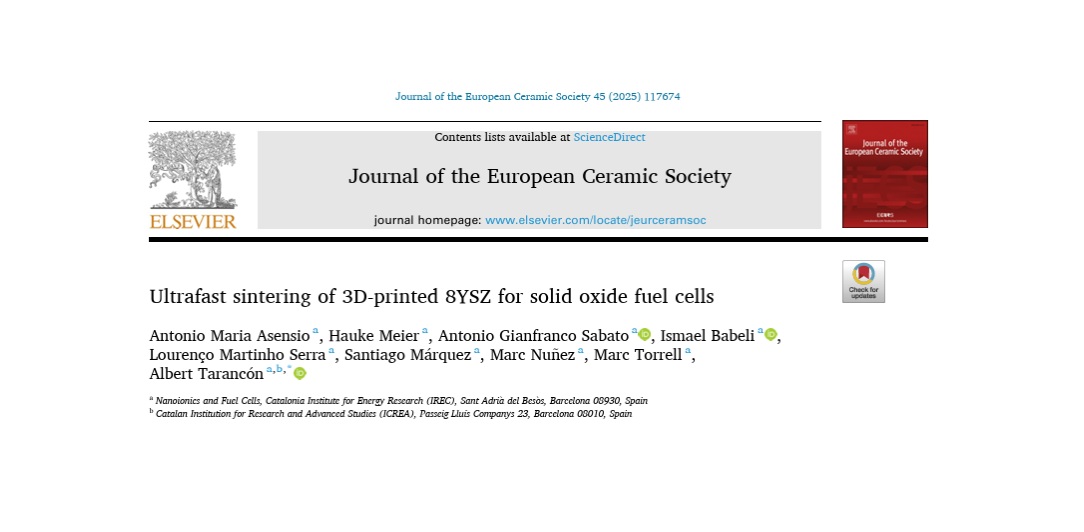
  • Ultrafast sintering of 3D-printed 8YSZ for solid oxide fuel cells

    Ultrafast sintering of 3D-printed 8YSZ for solid oxide fuel cells

    Well done to the researchers of our project partner IREC – Fundació Institut de Recerca en Energia de Catalunya who recently published a paper acknowledging Hy-SPIRE Project!

    The paper is entitled Ultrafast sintering of 3D-printed 8YSZ for solid oxide fuel cells and has been published in Open Access on the Elsevier Journal of the European Ceramic Society.

    Abstract

    Ceramic materials are key in energy technologies such as solid oxide cells or all-solid-state batteries. Recent advances in 3D-printing have pushed their potential, enabling unprecedented complex and customizable geometries. However, 3D-printing of ceramics involves remarkably long heat treatments, which limit their implementation. In this work, ultrafast high-temperature sintering was successfully employed to develop 3D- printed solid oxide electrolytes treated in less than 15 min, for the first time. The optimal sintering conditions resulted in >96 % densification preserving structural integrity. Despite the presence of intragranular porosity, ascribed to the non-equilibrium conditions of the process, the final ionic conductivity remained within the expected range for 8YSZ. Additionally, the complete UHS 3D-printed electrolyte-supported cell demonstrated a peak power density exceeding 0.5 W⋅cm2 at 900 ◦C, surpassing previously reported performances of similar systems. This highlights the potential of UHS as a final ceramic processing method to obtain highly densified and conductive materials with full functionality.

    Cite this article

    Antonio Maria Asensio, Hauke Meier, Antonio Gianfranco Sabato, Ismael Babeli, Lourenço Martinho Serra, Santiago Márquez, Marc Nuñez, Marc Torrell, Albert Tarancón (2025). Ultrafast sintering of 3D-printed 8YSZ for solid oxide fuel cells, Journal of the European Ceramic Society, Volume 45, Issue 16, 117674, ISSN 0955-2219. DOI: 10.1016/j.jeurceramsoc.2025.117674

    Read the article in Open Access at this link or find it on our “Results” web page: https://hy-spire.eu/results/

  • EPFL presents Hy-SPIRE at Eurotech winter school

    EPFL presents Hy-SPIRE at Eurotech winter school

    Dante Fronterotta is a PhD candidate in the Group of Energy Materials at École polytechnique fédérale de Lausanne | EPFL, under Senior Scientist Dr. Jan Van Herle. Dante earned his BSc and MSc in Mechanical Engineering at Politecnico di Torino. In EPFL, Dante completed his master thesis and is currently developing multiphysics models with COMSOL. His work focuses on improving the design and performance of solid oxide and proton-conducting electrolyzers.

    The PhD student participated in the EuroTech Hydrogen Winter School entitled Hydrogen Meets Carbon: Advanced Pathways for Clean Energy and Carbon Valorization.

    The school took place from the 6th to 10th of October 2025 at the Technical University of Munich.

    Organized by the EuroTech Universities Alliance, the school brought together students and early-career researchers from across Europe to explore innovative solutions in clean energy and carbon valorization. The program featured expert lectures from leading scientists and professionals, focusing on topics such as hydrogen production and storage, carbon capture and utilization, and integrated energy systems. In addition to academic input, participants had the opportunity to visit key industrial sites in the region, gaining practical insights into how advanced technologies are applied in real-world contexts.

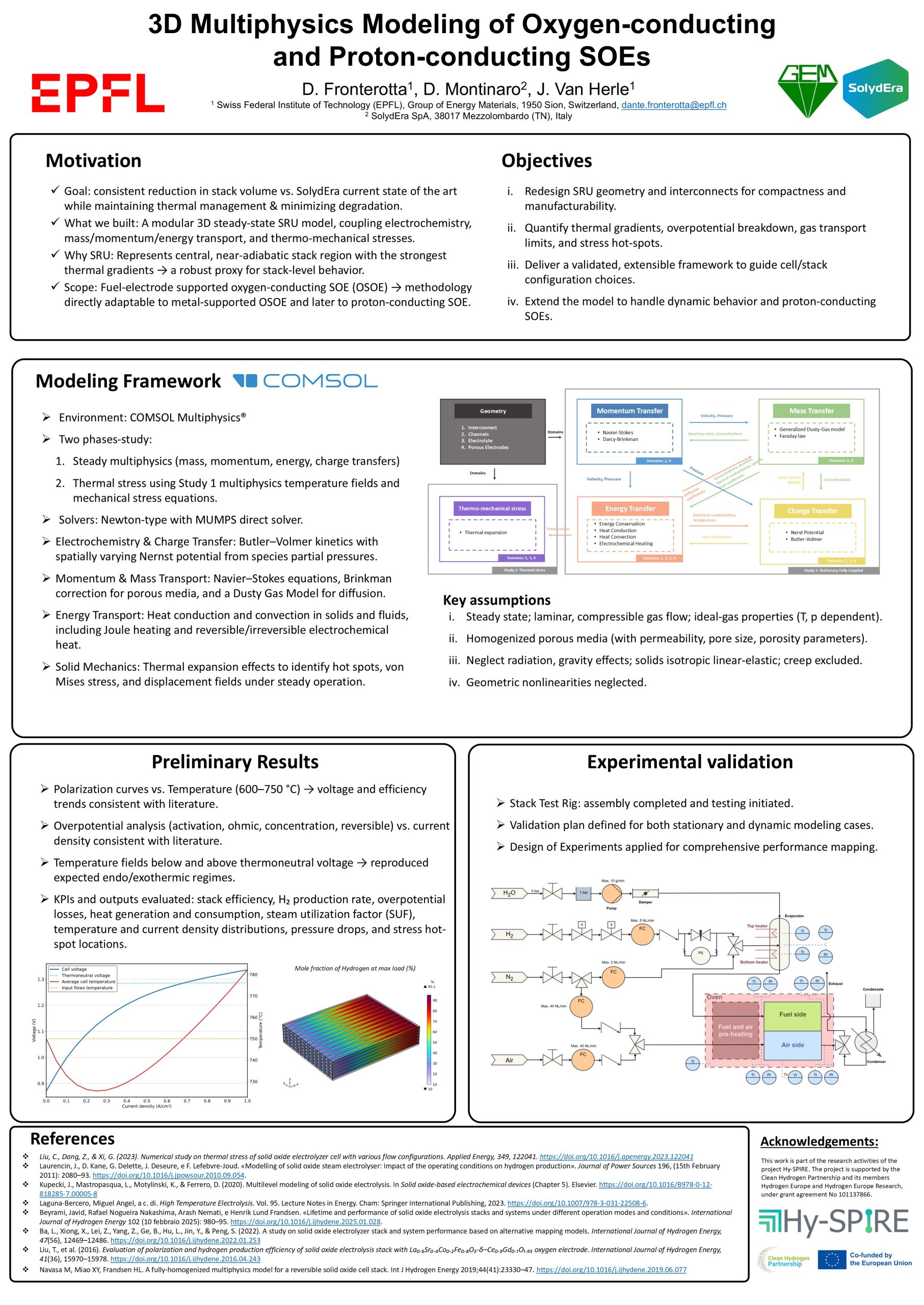
    Fronterotta presented the work “3D Multiphysics Modeling of Oxygen-conducting and Proton-conducting SOEs” co-authored by Jan van Herle (EPFL) and Dario Montinaro (SolydEra). Check the poster below!

    More information on the winter school can be found at this link: https://eurotech-universities.eu/news-and-events/events/eurotech-winter-school-hydrogen-meets-carbon/

  • Hy-SPIRE at SSPC22

    Hy-SPIRE at SSPC22

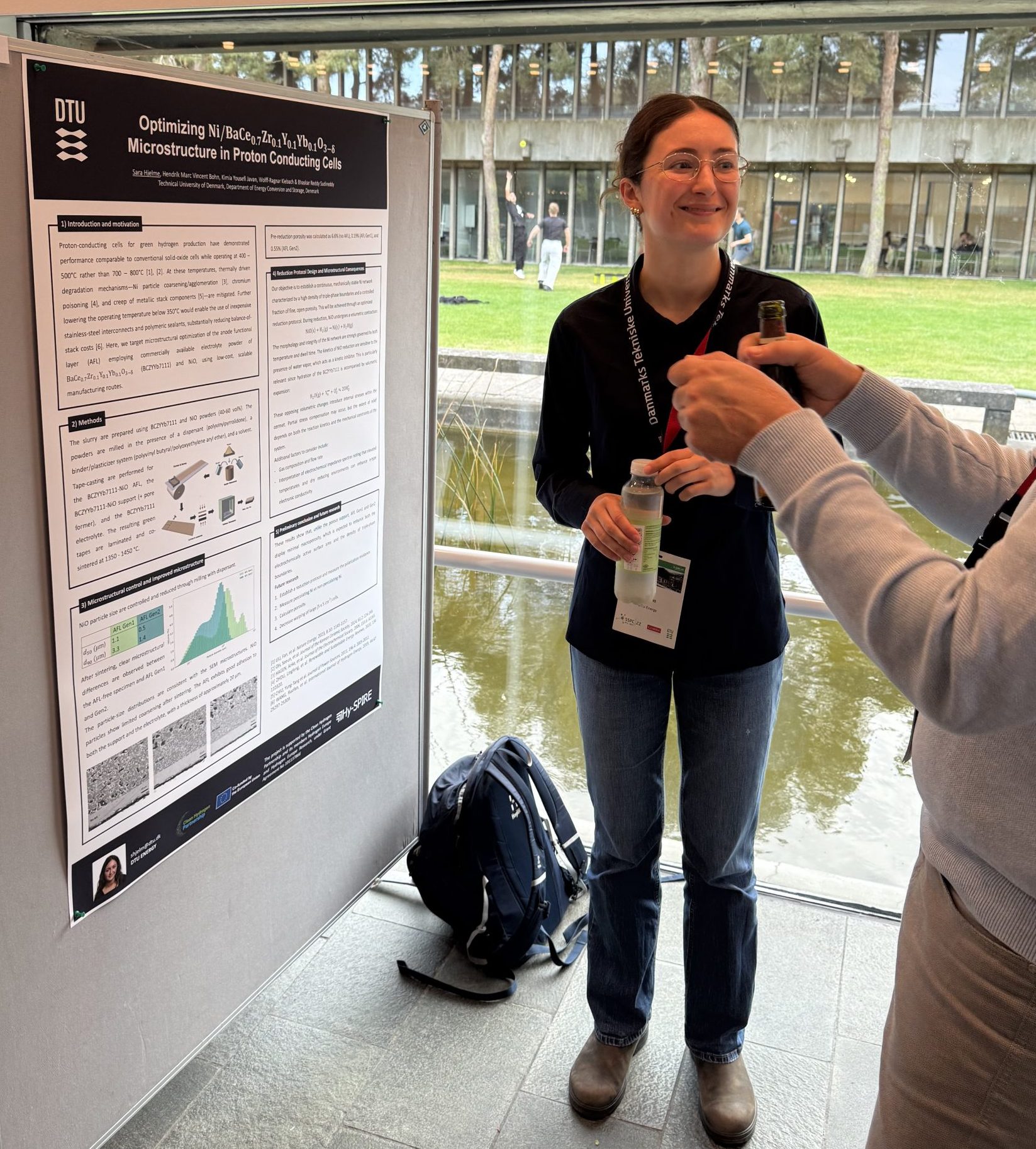
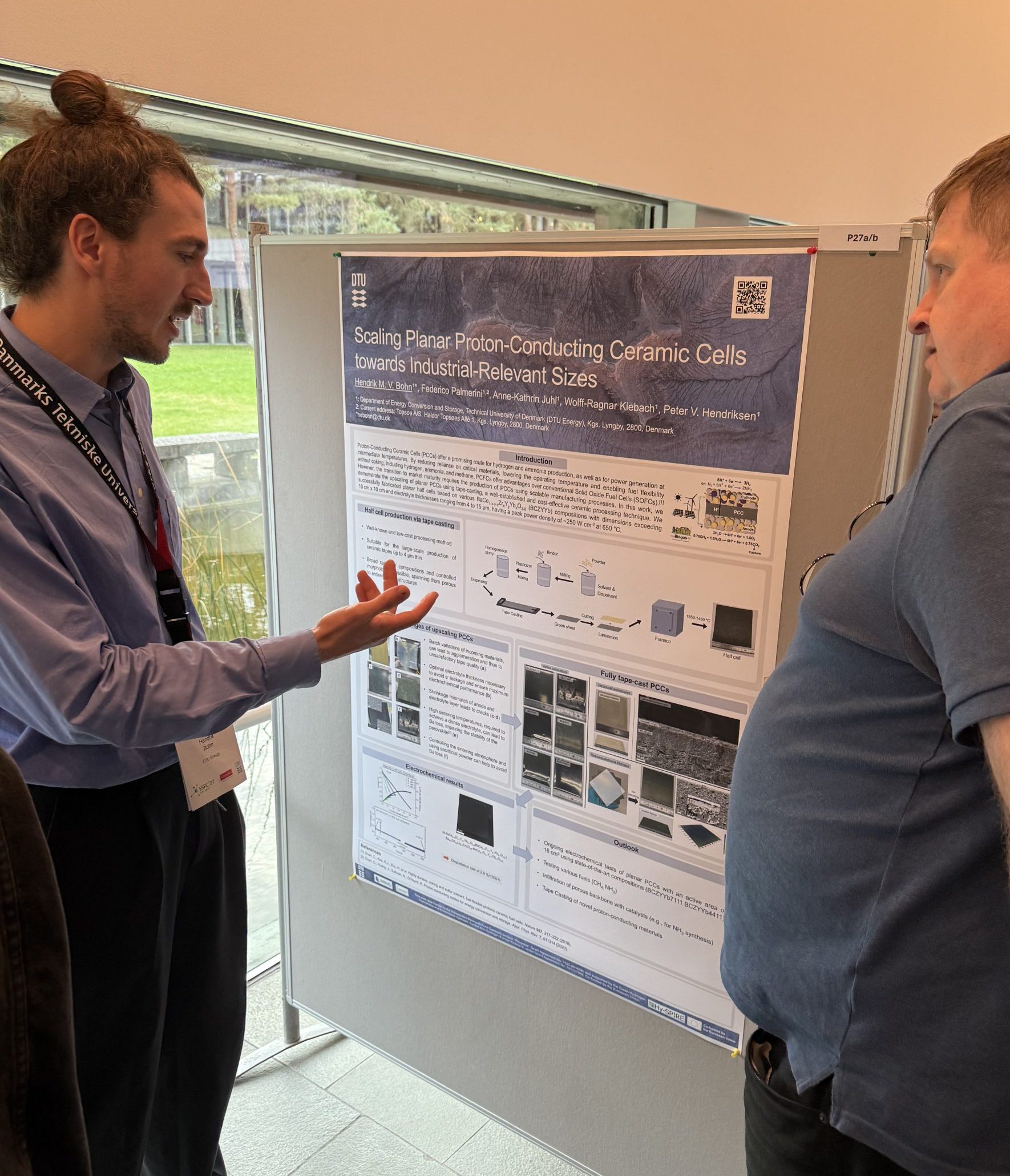
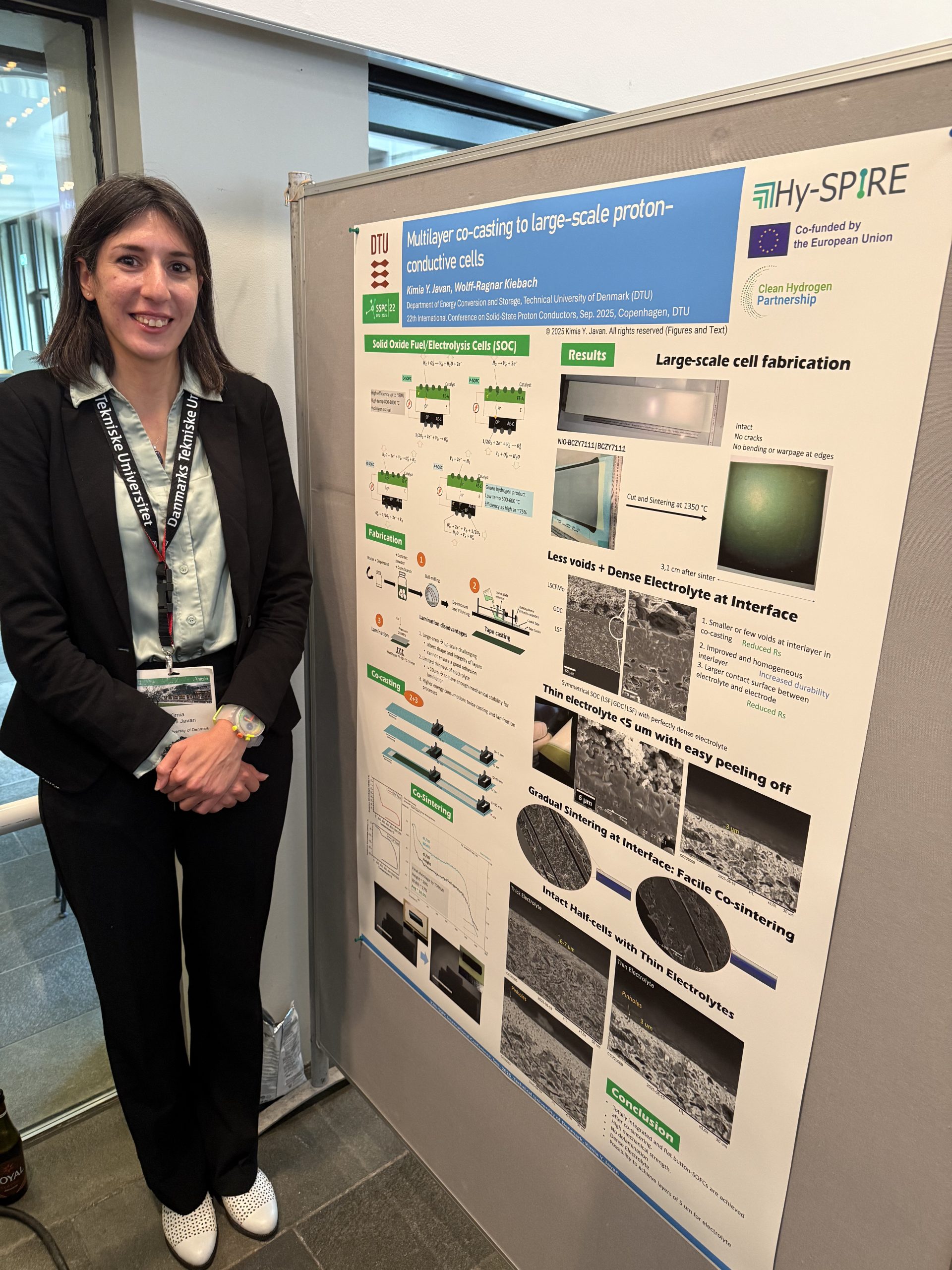
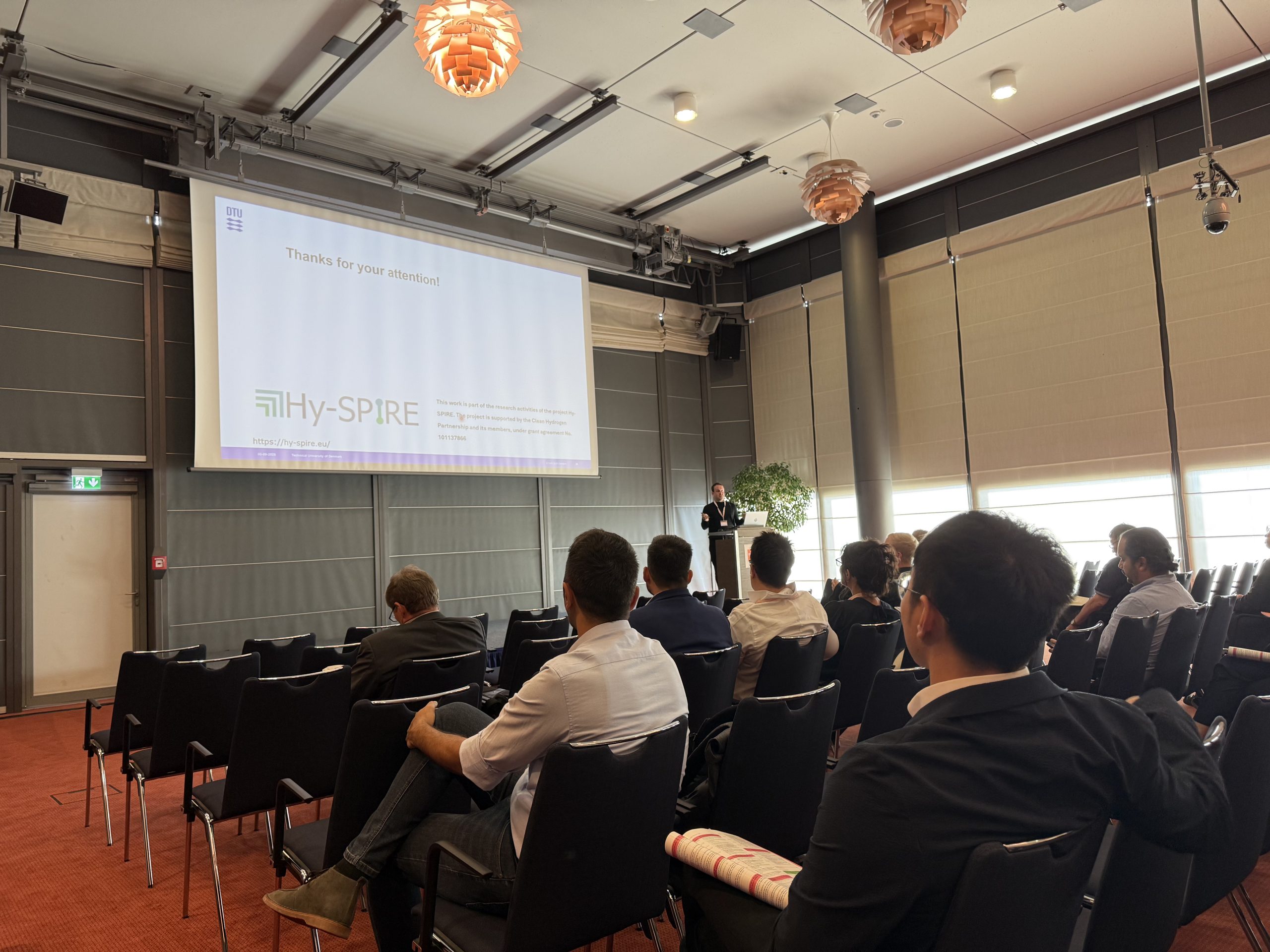
    The 22nd International Conference on Solid-State Proton Conductors | SSPC22 — a leading event for researchers and experts in the field – took take place in DTU – Technical University of Denmark on 14-19 September 2025. The project Hy-SPIRE participated in the event with posters and talks!

    Our Project Manager Anna Niemczyk represented Hy-SPIRE in the panel discussion entitled “Proton Conducting Ceramics: Where Do We Want to Go — and What Could Stop Us?”. The panel session will gather the representatives of the projects SingleSustainCellProtoStackPEPPER and leading voices from across the globe, with the purpose to discuss commercialization pathways, roadmaps, and the key roadblocks for proton-conducting ceramic (PCC) technologies — while raising awareness of ongoing projects worldwide.

    Great discussion that raised the interest of the audience!

    Numerous researchers from the Department of Energy Conversion and Storage of the Technical University of Denmark participated in the event with poster presentations.

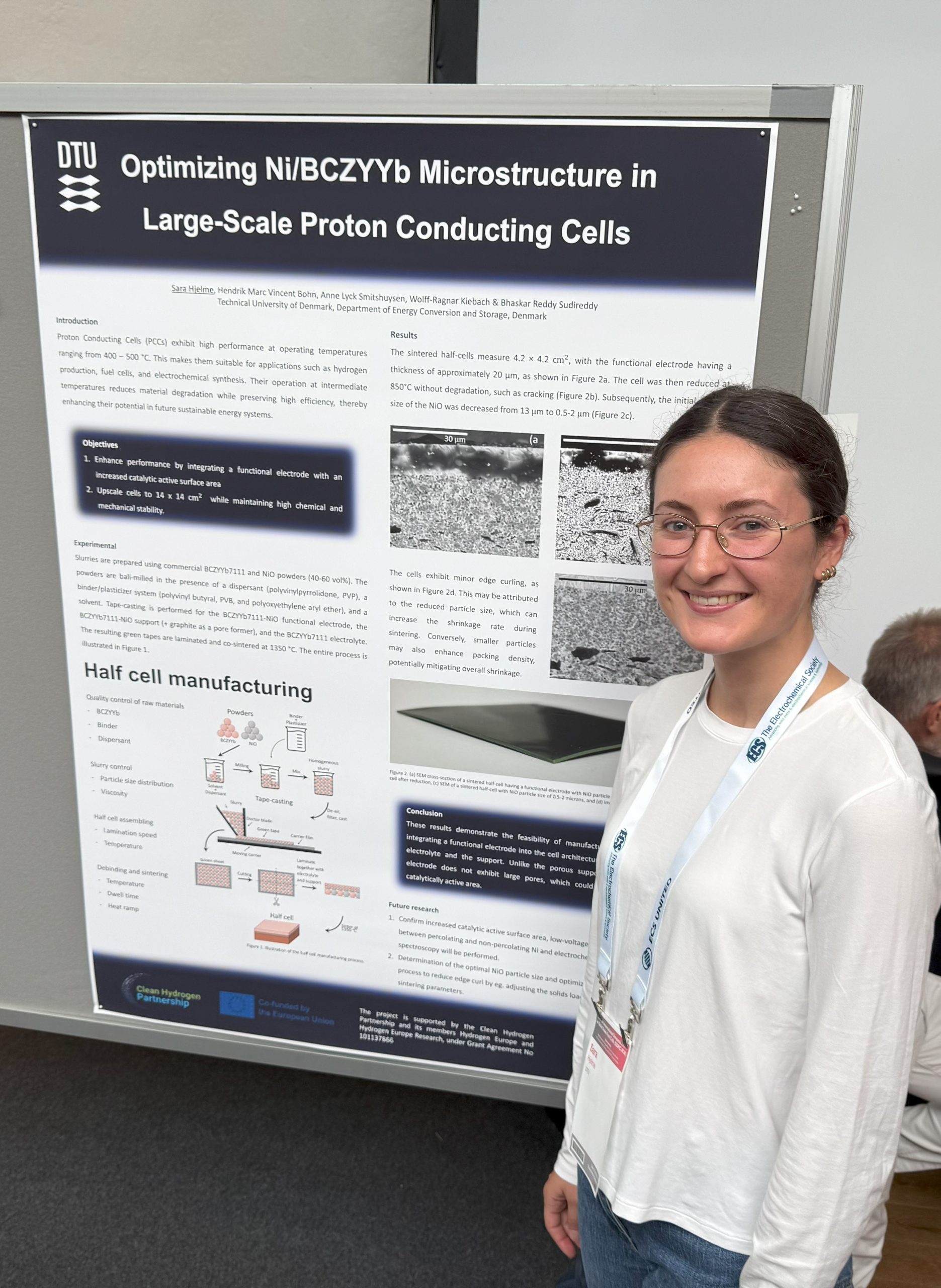
    Sara Hjelme presented the poster entitled Optimizing Ni/BCZYYb7111 Fuel Electrode Microstructure in Proton Conducting Cells. The poster showed results that demonstrate the feasibility of fabricating half-cells by integrating a fuel electrode into the current cell architecture. Unlike the porous support, the incorporated fuel electrode does not exhibit large pores, which could lead to a higher catalytically active area.

    The poster of Hendrik Marc Vincent Bohn focused on Scaling Planar Proton-Conducting Ceramic Cells towards Industrial-Relevant Sizes.

    Last but not least, Kimia Yousefi Javan presented the work entitled Multilayer co-casting to large-scale proton-conductive cells. 

  • DTU presents Hy-SPIRE at ECERSXIX

    DTU presents Hy-SPIRE at ECERSXIX

    Wolff-Ragnar Kiebach – Head of Section Applied Ceramics and Processing at the Department of Energy Conversion and Storage of the Technical University of Denmark – participated as invited speaker in the seminar “Ceramics for energy conversion and storage, chemistry and environment / Hydrogen”.

    The seminar addressed the transformation of the energy system towards conversion and storage of renewable energy and green molecules-based economy. Due to their unique properties, ceramic materials have great potential to resolve the challenges of this energy transition. The symposium will cover ceramic materials and components for applications in:

    • Electrochemical energy conversion (materials and components in electrolyzers and fuel cells)
    • Electrochemical energy storage (materials and components in batteries)
    • Power generation (high-temperature coatings and ceramic matrix composites for gas turbines, materials and components for nuclear fission and fusion reactors and nuclear waste confinement, materials and components for heat storage and exchange, materials and components for solar absorbers)
    • Energy harvesting (materials and components for thermoelectrics, photovoltaics, solar fuels/artificial photosynthesis)
    • Hydrogen production from different feedstocks (waste, biomass etc.)
    • Hydrogen storage and CO2 capture
    • Hydrogen conversion to chemicals and fuels (incl. process design)
    • Electrochemical applications (ionic/proton and electronic conducting dense or porous membranes for gas separation, catalytic membrane reactors)

    The XIXth Conference of the European Ceramic Society took place from August 31 to September 4, 2025 at the International Congress Center in Dresden, Germany.

    Planned every two years, the ECerS Conference focuses on cutting-edge research and product developments in a wide range of ceramic-related areas. The program provides an opportunity for scientists, researchers, engineers, and industry leaders from around the world to present and exchange their latest findings in ceramic science and technology.

    More information on: https://www.ecers2025.org/

  • Hy-SPIRE at ICE 2025 to present its TEA

    Hy-SPIRE at ICE 2025 to present its TEA

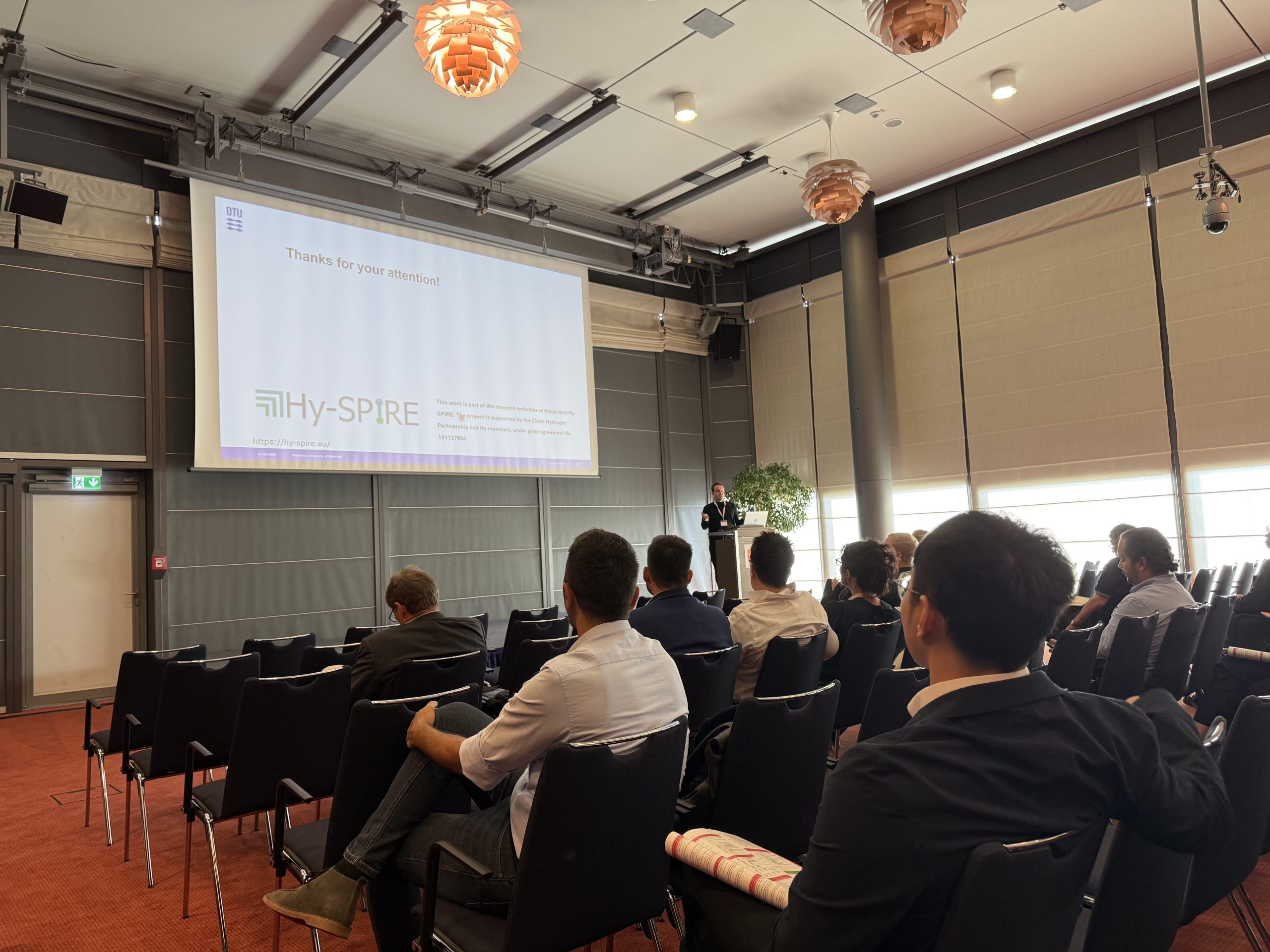
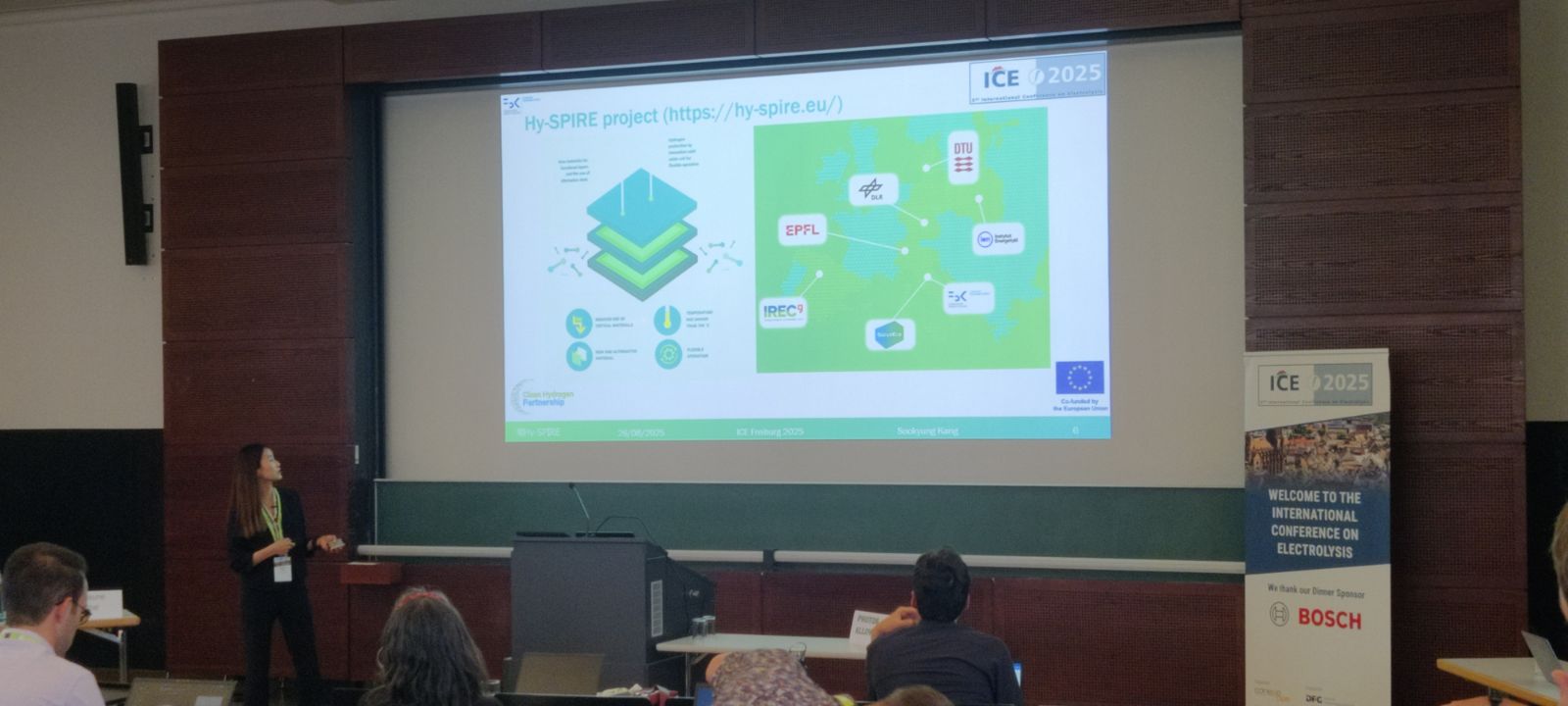
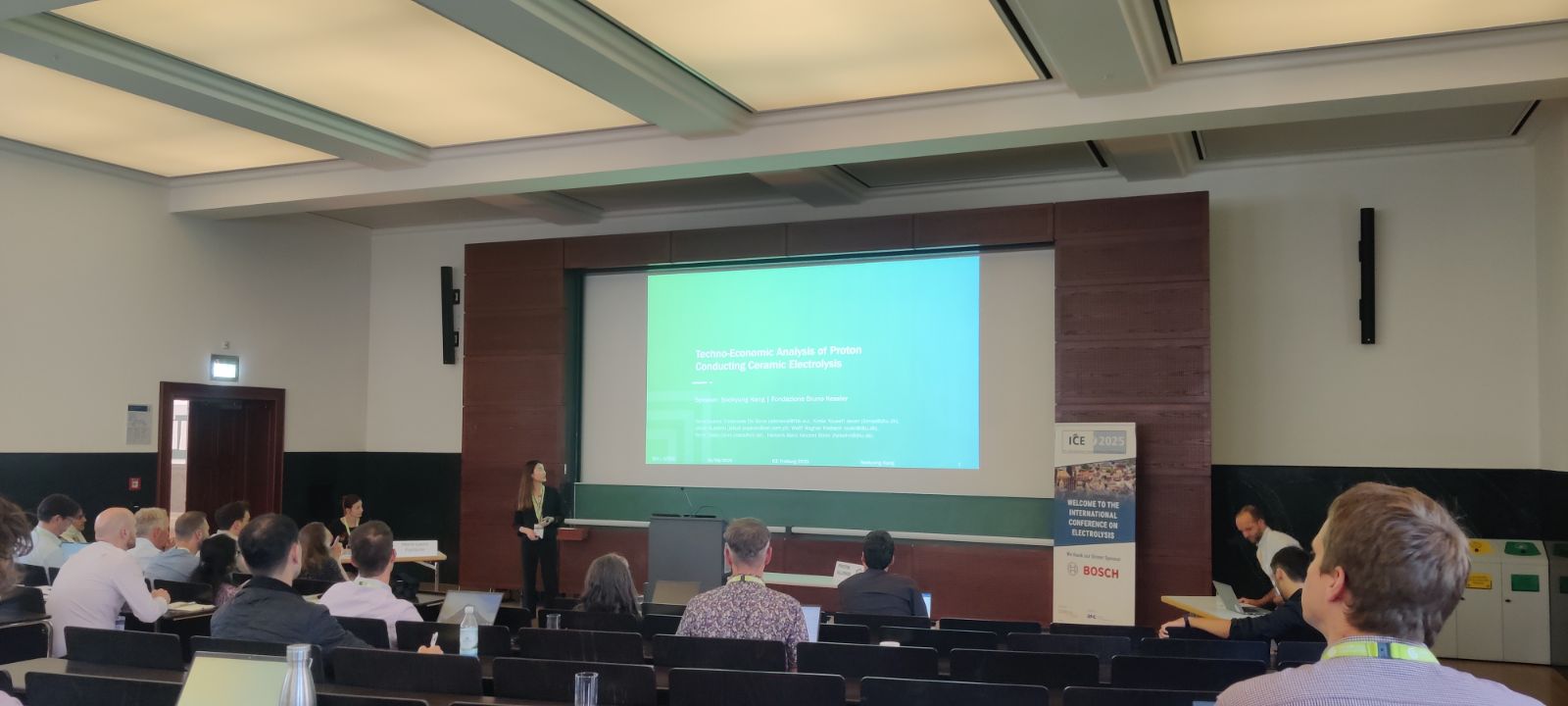
    Sookyung Kang – researcher at the Center for Sustainable Energy of Fondazione Bruno Kessler – participated in the 5th International Conference on Electrolysis with the presentation entitled “Techno-economic analysis of proton conducting ceramic electrolysis“.

    The presentation focused on high temperature electrolyser cost mitigation strategy through manufacturing process, stack performance and cost analysis.

    ICE 2025 took place from August 25-29, 2025 in Freiburg, Germany.

    At its 5th edition, the event is rapidly becoming a key platform for PhD students, academic researchers and technical experts from industry to share breakthroughs in electrolysis technology, particularly in its role in energy conversion and green hydrogen production.

    If you are interested in the history, scope and other info on the ICE conference series, please check this website

  •  SSPC22 Panel Discussion Announcement 

     SSPC22 Panel Discussion Announcement 

    Hy-SPIRE Project will take part in the 22nd International Conference on Solid-State Proton Conductors | SSPC22 — a leading event for researchers and experts in the field which will will take place in DTU – Technical University of Denmark on 14-19 September 2025!

    Our Project Manager Anna Niemczyk will represent Hy-SPIRE in the panel discussion entitled “Proton Conducting Ceramics: Where Do We Want to Go — and What Could Stop Us?”. The panel session will gather the representatives of the projects Single, SustainCell, ProtoStack, PEPPER and Hy-SPIRE, and leading voices from across the globe:

    • Marie-Laure Fontaine (SINTEF Industry, Norway) –representing the  EU projects Single, SustainCell, ProtoStack
    • Rémi Costa (German Aerospace Center – Deutsches Zentrum für Luft- und Raumfahrt, Germany) – representing the EU project PEPPER
    • Anna Niemczyk (Institute of Power Engineering – Instytut Energetyki, Poland) – representing the  EU project Hy-Spire
    • Christian Kjolseth (CoorsTek Membrane Sciences, Norway)
    • Sandrine Ricote (Colorado School of Mines, USA & HyEt Hydrogen, Netherlands)
    • Donglin Han (College of Energy, Soochow University, China)

    The session will be moderated by Peter Vang Hendriksen, with Ragnar Kiebach assisting in facilitating audience and online questions.

    Goal: Bring together diverse stakeholders to discuss commercialization pathways, roadmaps, and the key roadblocks for proton-conducting ceramic (PCC) technologies — while raising awareness of ongoing projects worldwide.

    Format:

    • Introductions from each panelist highlighting contributions toward bringing PCC technology to market.
    • Global perspectives, also from US and Chinese initiatives.
    • Open discussion to pinpoint challenges and opportunities.

     This is a unique chance to connect EU projects with global expertise, fostering collaboration across regions.

    We’re looking forward to an insightful discussion and welcome everyone’s engagement!

     Registration for the conference is still open until 28 August 2025 — don’t miss the opportunity to join us!

  • FBK at ECOS 2025

    FBK at ECOS 2025

    ECOS is the name of a series of international conferences that focus on modern aspects of Thermal Sciences with particular emphasis on Thermodynamics and its applications in energy conversion systems and processes. The 38th International Conference on Efficiency, Cost, Optimization, Simulation and Environmental Impact of Energy Systems (ECOS 2025) was held from the 29th of June to the 4th of July 2025, in Paris – France.

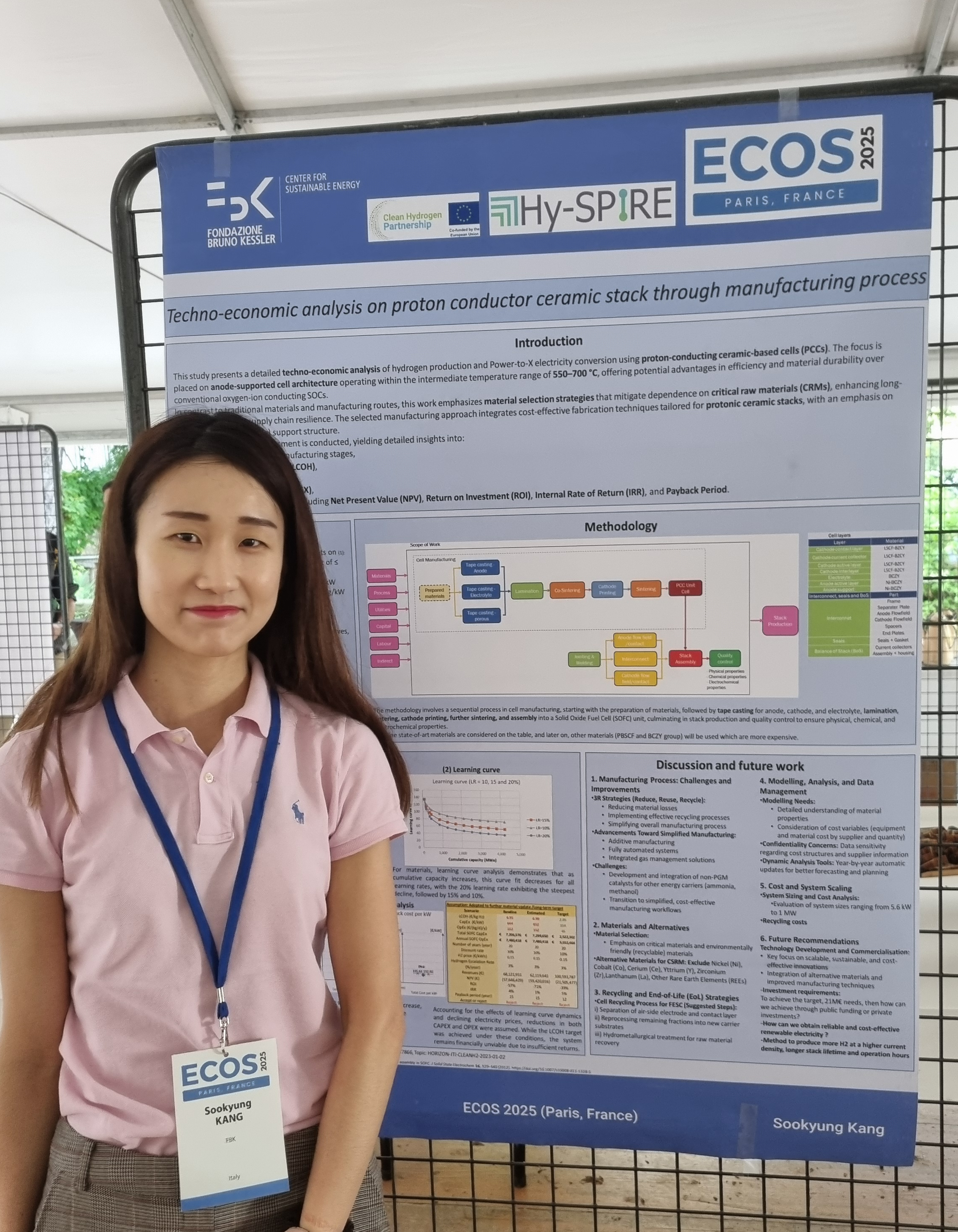
    Sookyung Kang – researcher at the Center for Sustainable Energy of Fondazione Bruno Kessler – participated in the event with the poster “Techno-economic analysis on proton conductor ceramic stack through manufacturing process“.

    The study presents a techno-economic analysis of an innovative solid oxide electrolyzer designed for cost-effective hydrogen production. The system aims to minimize reliance on noble raw materials while operating at intermediate temperatures (550–700 °C). By reviewing the latest advancements in solid oxide and proton-conducting ceramic electrolysis technologies, the study defines manufacturing processes, technical specifications, and material costs sourced from suppliers.

    A comprehensive cost breakdown is developed for a baseline system, categorizing expenses into materials, processes, utilities, capital, labor, and indirect costs. Key economic indicators—including CAPEX, OPEX, and Levelized Cost of Hydrogen (LCOH)—are calculated, alongside future cost projections based on learning curves, system scaling, and economic performance metrics such as Net Present Value (NPV), Internal Rate of Return (IRR), Return on Investment (ROI), and payback period.

    To evaluate economic viability and guide strategic development, a multi-sensitivity analysis explores the effects of key variables—green electricity price, system degradation rate, and hydrogen market dynamics—under multiple scenarios. The study benchmarks its findings against the 2030 targets set by the Strategic Research and Innovation Agenda (SRIA): LCOH ≤ €3/kg, CAPEX ≤ €520/kW, and OPEX ≤ €45/(kg/day)/year.

  • Partners present Hy-SPIRE at SOFC-XIX

    Partners present Hy-SPIRE at SOFC-XIX

    Hy-SPIRE project was well represented at the 19th International Symposium on Solid Oxide Fuel Cells (SOFC-XIX)!

    IPE-NRI, FBK, DTU and DLR participated in the event organised by The Electrochemical Society which took place at the historic Münchenbryggeriet in Stockholm, Sweden, from July 13-18, 2025. Since 1989, this international conference has brought together scientists, engineers, and researchers from academia, industry, and government laboratories to share results and discuss issues related to solid oxide fuel cells and electrolyzers. This forum provides an opportunity to learn and exchange information on the latest scientific and technical developments relating to SOFCs and SOECs.

    Sara Hjelme and Hendrik Marc Vincent Bohn participated from the Department of Energy Conversion and Storage of the Technical University of Denmark.

    Sara Hjelme presented the poster entitled Optimizing Ni/BCZYYb7111 Fuel Electrode Microstructure in Proton Conducting Cells. The poster showed results that demonstrate the feasibility of fabricating half-cells by integrating a fuel electrode into the current cell architecture. Unlike the porous support, the incorporated fuel electrode does not exhibit large pores, which could lead to a higher catalytically active area.

    Read the abstract here: https://ecs.confex.com/ecs/sofc2025/meetingapp.cgi/Paper/206498

    Hendrik Marc Vincent Bohn gave the presentation Advancements in the Upscaling of Proton-Conducting Ceramic Cells, which outlined the work done within the project provving the feasibility to upscale BCZYYb-based Proton Conducting Ceramic Cells (PCCs).  In the study, DTU reports the successful fabrication of fully tape-cast PCCs based on various BCZYYb compositions, co-sintered at 1350 °C.

    Read the abstract here: https://ecs.confex.com/ecs/sofc2025/meetingapp.cgi/Paper/206542

    The Head of High Temperature Cells & Stacks at Institute of Engineering Thermodynamics of the German Aerospace Center (DLR) Remi Costa chaired the Oral Sessions Proton Conducting Cells 3 and 4. Remi Costa showed the results in terms of performance and critical challenges of PCC technology in the presentation On the Development of PCC Technology in a Planar Geometry for the Hydrogen Energy Applications.

    Read the abstract here: https://ecs.confex.com/ecs/sofc2025/meetingapp.cgi/Paper/206540 

    The researchers Emanuele de Bona and Sookyung Kang represented the HyRES Unit of the Center for Sustainable Energy at Fondazione Bruno Kessler

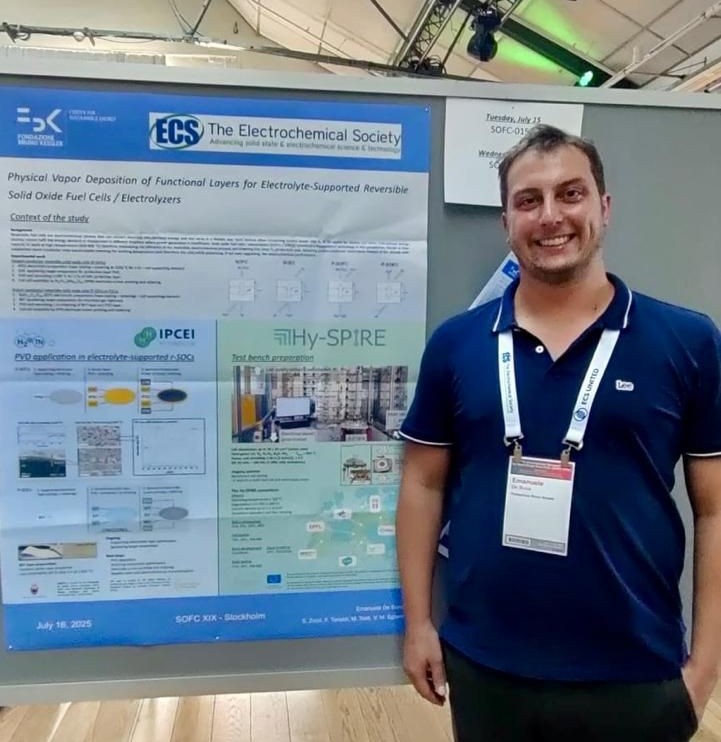
    Emanuele de Bona presented the poster entitled Physical Vapor Deposition of Functional Layers for Electrolyte-Supported Reversible Solid Oxide Fuel Cells / ElectrolyzersThe poster reports the research activity done on protective layers which must be applied between the electrolyte and the electrodes to avoid chemical reactions and element interdiffusion during operation. These layers were applied by well-established screen printing and physical vapour deposition (PVD), to try to minimize its thickness and optimizing the cell performance. The work was done in collaboration with other researchers of the Center for Sustainable Energy and with the University of Trento. 

    Read the abstract here: https://ecs.confex.com/ecs/sofc2025/meetingapp.cgi/Paper/205758 

    Sookyung Kang‘s presentation entitled Techno-Economic Analysis of Proton Conducting Ceramic Electrolysis examined the current technological developments in production processes, and defined manufacturing processes, along with technical specifications and material costs from suppliers.

    Read the abstract here: https://ecs.confex.com/ecs/sofc2025/meetingapp.cgi/Paper/205949 

    More information on the event at the link: https://www.electrochem.org/sofc-xix 

  • Hy-SPIRE flies to Seattle at the MRS Spring Meeting!

    Hy-SPIRE flies to Seattle at the MRS Spring Meeting!

    The Materials Research Society (MRS) is an organization of materials researchers worldwide that promotes communication for the advancement of interdisciplinary materials research and technology to improve the quality of life.

    Every year, the Society organises the MRS Spring and Fall Meetings, which are essential opportunities for discovering and presenting the latest developments in materials research. As it is possible to read on the Society websiteThese meetings reflect the growing global, cross-disciplinary collaboration in materials research each year. Since 1973, Materials Research Society (MRS) has focused on the big picture—providing an intellectual home for big ideas and big discoveries with big impact across our global field. Rather than approaching materials research through a narrow lens, MRS takes a wide-angle view of our multidisciplinary landscape, uniting materials researchers from academia, national laboratories, and industry across specialties—all of whom play a role in advancing our global field and quality of life. With nearly 14,500 Members from 90 countries, our researchers represent diverse skills and expertise, including chemistry, biology, physics, engineering and beyond.

    The 2025 MRS Spring Meeting & Exhibit took place during the first week of April, in Seattle, Washington, and the Hy-SPIRE Project could not miss such an opportunity!

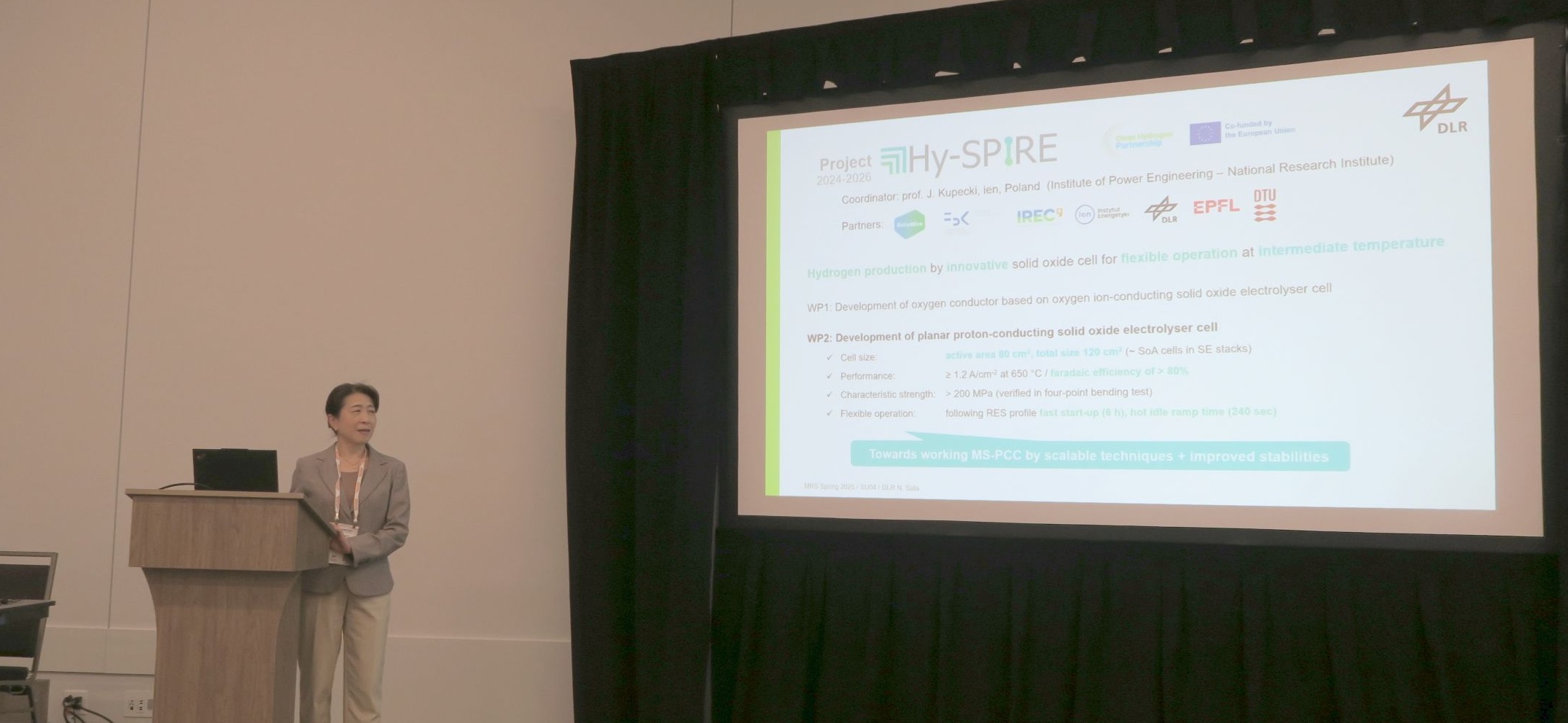
    Noriko Sato,  Senior Researcher at the Institute of Engineering Thermodynamics at the German Aerospace Center – DLR in Stuttgart – attended the MRS Sprint Meeting with the presentation “Developing Protonic Ceramic Cells on Porous Metal Supports”

    Abstract: Perovskite oxides, such as BaZrO3, demonstrate high proton conductivity at intermediate temperatures when aliovalent cations are doped. Proton conduction in the operational temperature range of 400-600 °C is attractive for variety of applications, including fuel cells, steam electrolysis and electrochemical hydrogen pump, that are important technologies in hydrogen economy. The state-of-the-art electrolytes, Y/Yb doped Ba(Zr,Ce)O3-δ, have been intensively studied to develop Protonic Ceramic Cells (PCC) of good performance and stability, which promises their potential for electrochemical devices. In the conventional ceramic process, sintering temperature needs to be very high (> 1400 °C) to densify the PCC electrolytes, making it challenging to up-scale PCCs by industrial technologies and planar PCCs are not yet commercially available unlike the solid oxide cells. Porous substrates made of Ni-cermet are typically used as PCC supports. As an alternative architecture, a porous metal supported PCC (MS-PCC) is proposed. The high robustness of MS architecture under redox and thermal cycling has been successfully demonstrated for solid oxide fuel cells. MS architecture has high mechanical stabilities, allows to reduce the cost and ceramic material consumption, and makes the stack integration and up-scaling easier. Those advantages are very attractive for PCCs, whereas the major challenge is to find a manufacture route to achieve dense and stable PCC electrolyte layer on the porous metal. Finding good material combination is important that would result in high performance and mitigate the risk of cell degradation. The microstructures as well as the electrochemical properties of the component layers are also crucial. The key issues are the component materials and the scalable technologies.
    By utilizing commercial porous metal support and ceramic membrane lamination technique to down-size the pores from 30 μm to ~100 nm, 1 μm-thick gas tight PCC was achieved by Pulsed Laser Deposition. The MS-PCC concept was successfully demonstrated by Fuel cell and steam electrolysis operation [1]. In this talk, the achievement and the issues in the MS-PCC development at DLR will be presented and the challenges towards up-scaling will be discussed.

    Link to the presentation: https://www.mrs.org/meetings-events/annual-meetings/2025-mrs-spring-meeting/symposium-sessions/presentations/view/2025-mrs-spring-meeting/2025-mrs-spring-meeting-4208629


  • Hy-SPIRE project promoted at H2POLAND and NetZero events

    Hy-SPIRE project promoted at H2POLAND and NetZero events

    H2POLAND is the first fair in Poland and Central and Eastern Europe devoted entirely to hydrogen technologies. The forum is a meeting during which talks about the future of decarbonization and the European economy play a key role.

    The event took place on April 8–10 at the Poznań International Fair, and the Hy-SPIRE project was actively promoted!

    As coordinator of the Hy-SPIRE project, the Institute of Power Engineering – National Research Institute (IEN-PIB) showcased its latest achievements in hydrogen research. Prof. Jakub Kupecki, Hy-SPIRE Project Coordinator and Director of the Center for Hydrogen Technologies CTH2 at IEN-PIB, participated in several expert panels and discussions. As it is possible to read in his LinkedIn post, among the numerous activities he was involved in, Prof. Jakub Kupecki participated in two panel discussions:

    • SMR panel, HTTR and full-scale nuclear power plants – what is the future of Polish?
    • New Horizons of District Heating panel – Electrification, Geothermal Energy, Biogas or Hydrogen


    Hy-SPIRE team members  Dr Anna Niemczyk and Ewa Andruszków also took part in promoting the project and engaging with stakeholders. Hy-SPIRE received strong interest as a key initiative supporting innovative hydrogen solutions!

    More information on H2POLAND: https://h2poland.com.pl/en

  • Join the workshop at SSPC22!

    Join the workshop at SSPC22!

    The 22nd International Conference on Solid-State Proton Conductors will take place in Copenhagen (Denmark) from September 14–19, 2025. The event will be held on the campus of our project partner the Technical University of Denmark.
    The SSPC conference series began in the early 1980s as a Danish-French workshop, and is back to Denmark for the first time in over 40 years.

    This conference provides an invaluable platform for presenting recent findings and exchanging ideas through oral and poster sessions. SSPC-22 will focus on fabrication and characterization of proton-conducting materials, including ceramics, oxyacids, salts, polymers, and glasses, and will address applications across a range of fields such as fuel cells, electrolyzer cells, membrane reactors, sensors, carbon capture and utilization, and Power-to-X technologies.

    Thanks to the work of Prof. Ragnar Kiebach,  Hy-SPIRE will participate in a thought-provoking conversation on the future of proton-conducting ceramics during the panel session entitled “Proton Conducting Ceramics: Where Do We Want to Go and What Could Stop Us?

    The session will feature core contributors from five major projects: Hy-SPIRE, PROTOSTACK, PEPPER, SINGLE and SUSTAINCELL.

    The panel will be a great occasion for presenting these large research projects as well as sharing results and key insights from ongoing work.

    These projects are supported by the Clean Hydrogen Partnership and its members. Do you know them?

    Hy-SPIRE project aims at further boosting the potential of SOEL by lowering the operating temperature below 700°C, and increasing its flexibility in order to fit with RES generation profiles. Within the project, novel cells will be developed towards achieving strict KPIs such as low degradation equal to or lower than 0.75% per 1,000 h, operation at high current densities ca. 1.2 A/cm2 and ability to operate dynamically and fast ramping.

    PROTOSTACK is developing a new stack technology for direct production of pure electrochemically pressurized hydrogen at significantly better efficiencies than conventional electrolysis technologies.

    The EU-funded PEPPER project is developing the next-generation electrolysis technology based on planar proton-conducting ceramic electrolysis cells (PCCELs).

    The SINGLE project will enable ammonia as an energy carrier in the hydrogen value chain through demonstration of a Proton Ceramic Electrochemical Reactor (PCER) that integrates (i) ammonia dehydrogenation reaction, (ii) hydrogen separation, (iii) heat management and (iv) compression in a single stage.

    The SUSTAINCELL project aims at supporting the European industry in the development of the next generation electrolyser and fuel cell technologies (both low and high temperature) by developing a sustainable European supply chain of materials, components and cells, significantly less reliant on critical raw materials (CRM), with lower environmental footprint and costs, and higher performance and durability than existing technologies.

    More information on SSPC-22 at https://www.conferencemanager.dk/solid-stateprotonconductors
  • DLR brings Hy-SPIRE at the Hannover Fair

    DLR brings Hy-SPIRE at the Hannover Fair

    With more than 1,600 speakers and 4,000 exhibitors, 130,000 on-site attendees and more than 130 Startups, HANNOVER MESSE is one of the most important international platform for industrial transformation.

    The cross-sector use of hydrogen – especially green hydrogen as a substitute for fossil fuels – is a key issue in the sustainable transformation of industry. Hydrogen can be used in mobile and stationary applications in many sectors of the economy. At HANNOVER MESSE, more than 500 exhibitors will demonstrate the versatility and added value of hydrogen and fuel cells in industrial production.
    This annual event takes place during the first week of April, and Hy-SPIRE could not miss it!

    Stephanie Wolf, postdoctoral researcher at the Institute of Engineering Thermodynamics of our partner The German Aerospace Center (DLR),  is currently in Hannover. 

    As it is possible to read in their News,  at Hannover Messe DLR showcase cutting-edge technologies, innovations and successful transfer projects.

    Join Stephanie and DLR at Stand A48, Hall 2! Let them introduce to Hy-SPIRE!

    More at the link: https://www.hannovermesse.de/en/topics/industry-trends/hydrogen-fuel-cells/